After some Salzgitter residents rubbed their eyes in amazement at the sight of Créteil's coat of arms on France's national holiday last year, July 14, 2020, Imatra's coat of arms will now be flown.
Mayor Frank Klingebiel will not be on site for the celebrations to mark the 72nd anniversary of the founding of the Finnish twin town of Imatra on August 22. Due to the coronavirus pandemic, there will be no big birthday party in Imatra, but Klingebiel was happy to comply with the request of his counterpart Kai Roslakka and sent his heartfelt congratulations with a video message, which will be shown on a large screen in Imatra's city center.
Like so many other things, personal visits were not possible this year, but the active city friendship with Imatra will of course continue to be cultivated in other ways. Football and ice hockey teams, as well as official delegations and music bands such as the "Dark Ride Brothers", who played at the Old Town Festival, have enlivened and strengthened this friendship over the years and will hopefully be guests in Salzgitter again soon.
The flag with the coat of arms will not fly again at the town twinning square until December 6, Finland's national holiday and the associated independence from the Russian Empire in 1917, provided that the ice hockey team led by Mikko Airas does not decide to pay a flying visit to Salzgitter at short notice before then, as has often been the case.
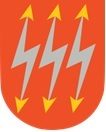
The official emblem and symbol of Imatra is the coat of arms. The citizens of Imatra regard the coat of arms as an important part of their identity, as the colors red, silver and gold symbolize the goals of development, joie de vivre, prosperity and health. It shows a red shield with three vertical silver lightning bolts with golden tips pointing in two directions. The coat of arms refers to the importance of the hydroelectric power station and the electricity it generated, which made industrialization possible for the town and the region in the first place. At the end of the 1920s, the Vuoksi River was dammed for the first time to generate electricity and the capacity of the power plant was then increased from 56 MW to 125 MW between 1929 and 1937.