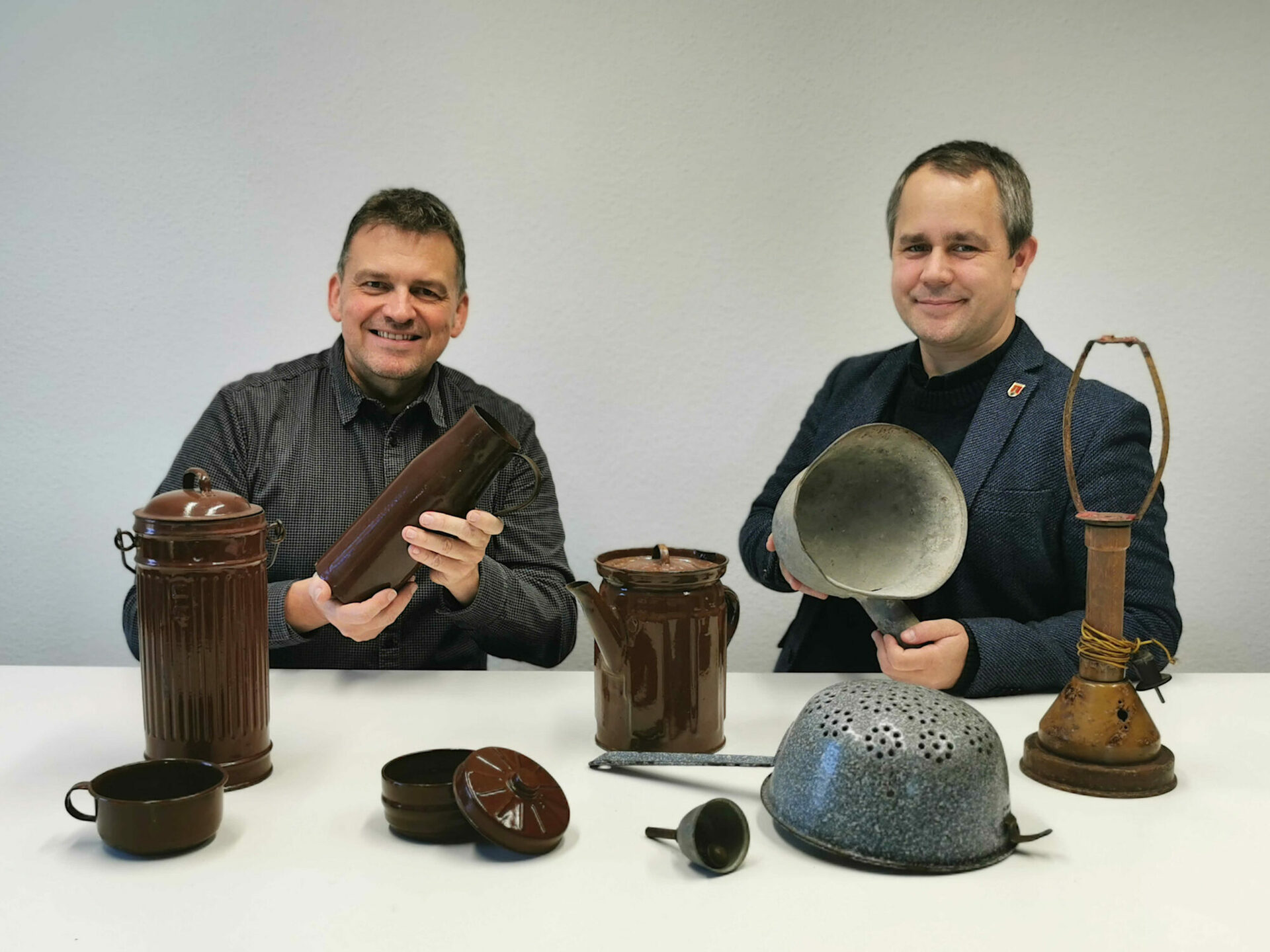
As a result, the museum now has an extensive and high-quality collection on the highly interesting subject of "emergency objects".
Today, the term "emergency objects" refers to civilian everyday objects that were created in the general hardship of the immediate post-war period from 1945 to 1949, primarily by converting military material. The spectrum ranges from milk jugs and cups made from gas mask canisters and shell casings to clothing for young and old made from old flour sacks, uniforms, flags and parachute silk, to paddle boats made from aircraft tanks and lamps made from bazookas.
These objects are particularly relevant to the history of Salzgitter, as many refugees and displaced persons lived here in camps in the post-war period, sometimes in terrible conditions and often with almost no possessions. For them, the use of partly purchased, but often also self-made emergency items was an essential survival strategy.
From next spring, significant parts of the former Dr. Haack collection will be shown in a special exhibition together with items on loan from other collectors. Where possible, they will then be integrated into the museum's permanent exhibition.
Museum director Arne Homann on the newly acquired collection: "I am delighted that the Förderkreis has acquired this important collection for us. Emergency objects bear witness to the hardship and suffering of the war and post-war period. But they are also the results of human creativity in difficult times in the sense of 'swords into plowshares'. For many young people today, the deprivations of the past are hard to imagine. The newly acquired collection will help to convey this time to them even better in our museum."
