

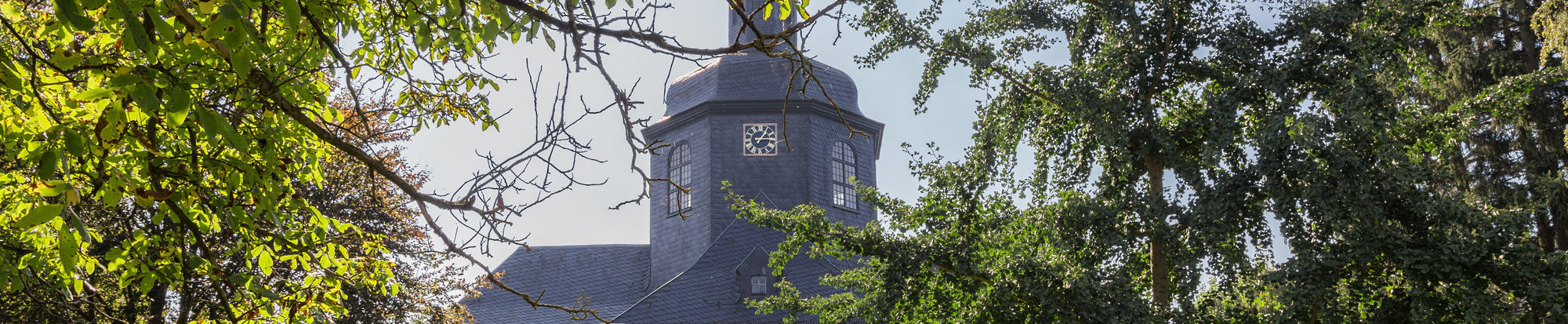

Around 1695/96, the hereditary prince bought the Renaissance castle built around 1600 (now Salder Castle Museum) and the village of Salder with all rights from the impoverished Lords of Salder. In the following years, he had the castle remodeled as a summer residence.
In 1709, or possibly a few years earlier, he also acquired the patronage rights to the old Romanesque parish church. This old church, especially its tower, had become dilapidated and it was decided to demolish the old church and build a new one. By acquiring the patronage rights and assuming a considerable part of the building costs, the way was now clear for August Wilhelm to have a parish church built, but also a palace church at the same time.
In protest to his father, who had converted to the Roman Catholic faith, he wanted to build a church with a spatial form that was considered ideal for the Protestant sermon service, but in which it would not have been possible to hold a Catholic mass without major alterations.
The master fortress builder Johan Caspar Völcker, who had also built St. Andrew's Church in Seesen and the parish church in Groß-Schwülper, was commissioned with the architectural design and construction of the new church. Without sacrificing symmetry, the shape of the transept church created plenty of space for the people around the altar and pulpit, while at the same time allowing the lord of the castle and his entourage in the ducal priesthood to be close to the church service and at the same time keep their distance from the people.
