

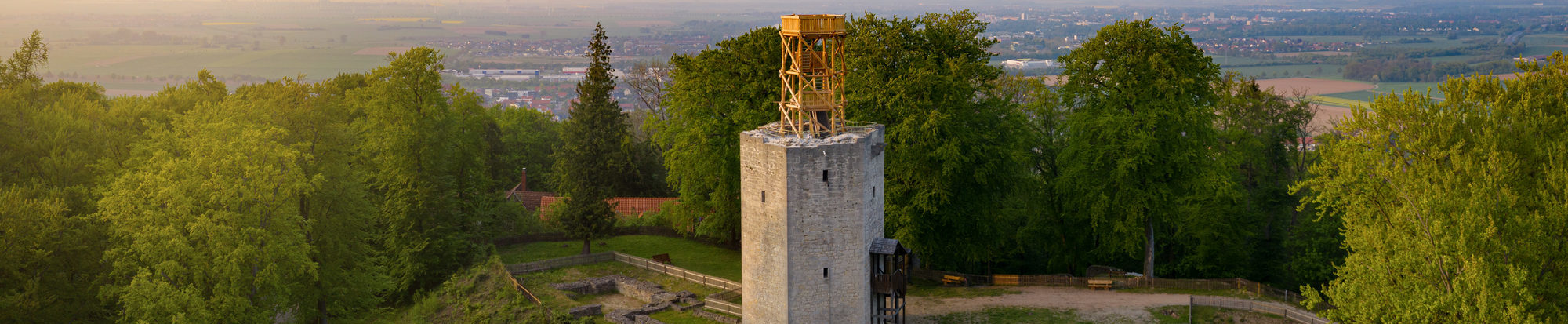
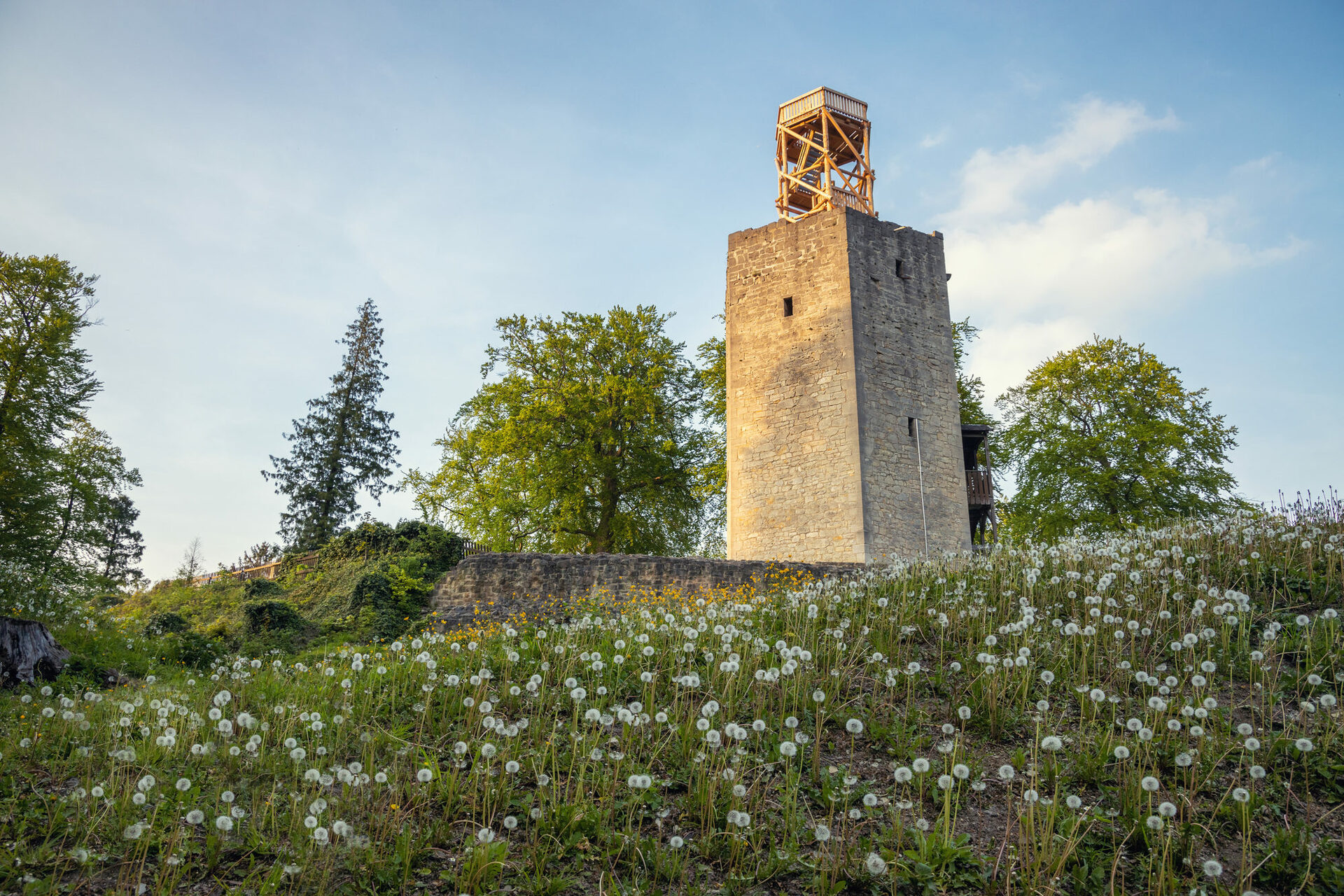
Situated on a steep hilltop on the Salzgitter ridge, it served the great Duke of Brunswick, the Duke of the Guelphs, to secure his power base against his neighbors in the episcopal city of Hildesheim and imperial Goslar.
Its strategically important location also meant that trade routes could be controlled. After the open dispute with Henry the Lion in 1180, it was a preferred target for attack and conquest by Emperor Frederick Barbarossa and his troops.
In 1194, Frederick's successor Henry VI returned it to the Guelphs. Lichtenberg Castle was not destroyed until 1552 as a result of the Schmalkaldic War by cannons of the mercenary leader Vollrad von Mansfeld in a feud with the Brunswick Duke Henry the Younger.
Nevertheless, it was never forgotten. Until the 1950s, the ruins and the village of Lichtenberg were a popular excursion destination.
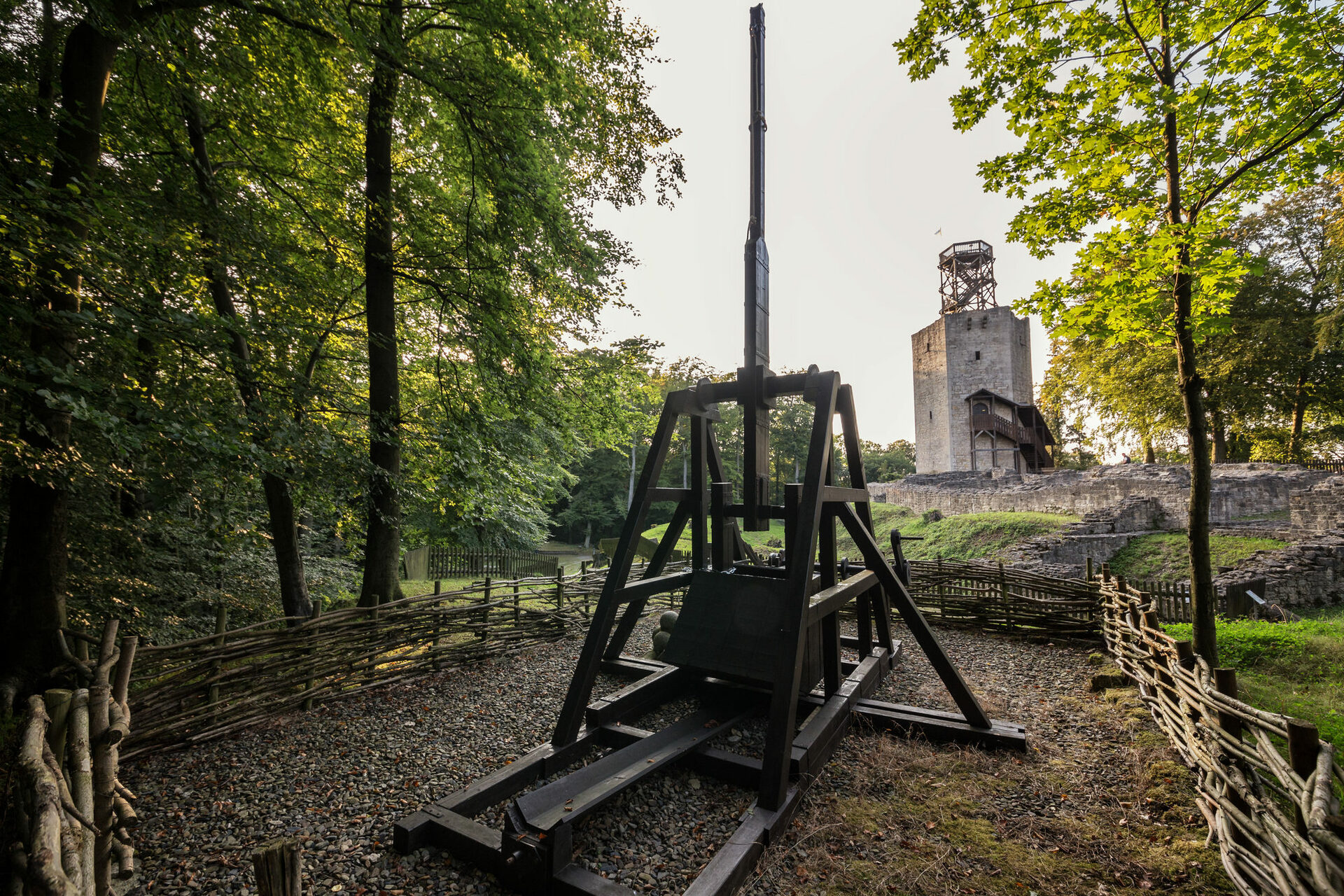
In 1995, the 800th anniversary of Henry the Lion's death, extensive renovation and restoration work began on the castle grounds with the support of the state of Lower Saxony, foundations, private donors and the city of Salzgitter.
A visible sign of this is a new wooden scaffolding with a viewing platform on the keep, which offers visitors a magnificent view of northern Salzgitter and the landscape from the Harz Mountains with the Brocken to Braunschweig when visibility is good.
There is also a new permanent exhibition on the castle and its history in the keep.
Additional information for castle visitors
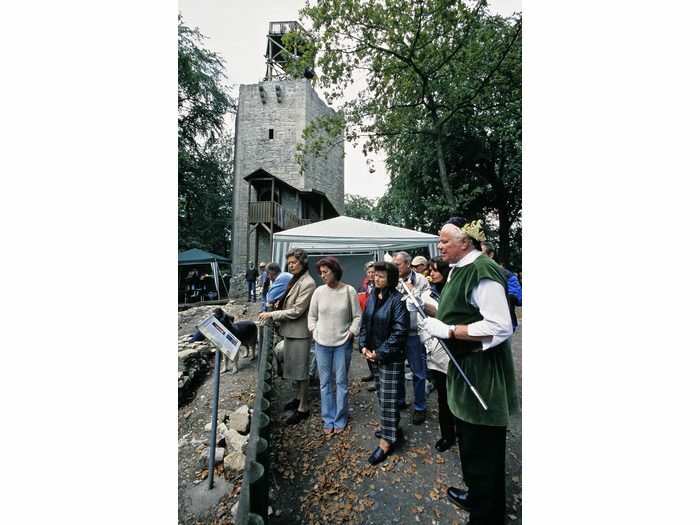
There are boards at the main buildings explaining the details of the structure and its historical integration.
The castle grounds are open to the public at all times. The key for the entrance door to the tower can be obtained from the Friends' Association.
Around the castle, a number of paths through the Salzgitter hills invite visitors to go on more or less extensive excursions and exploratory walks.
 read out