

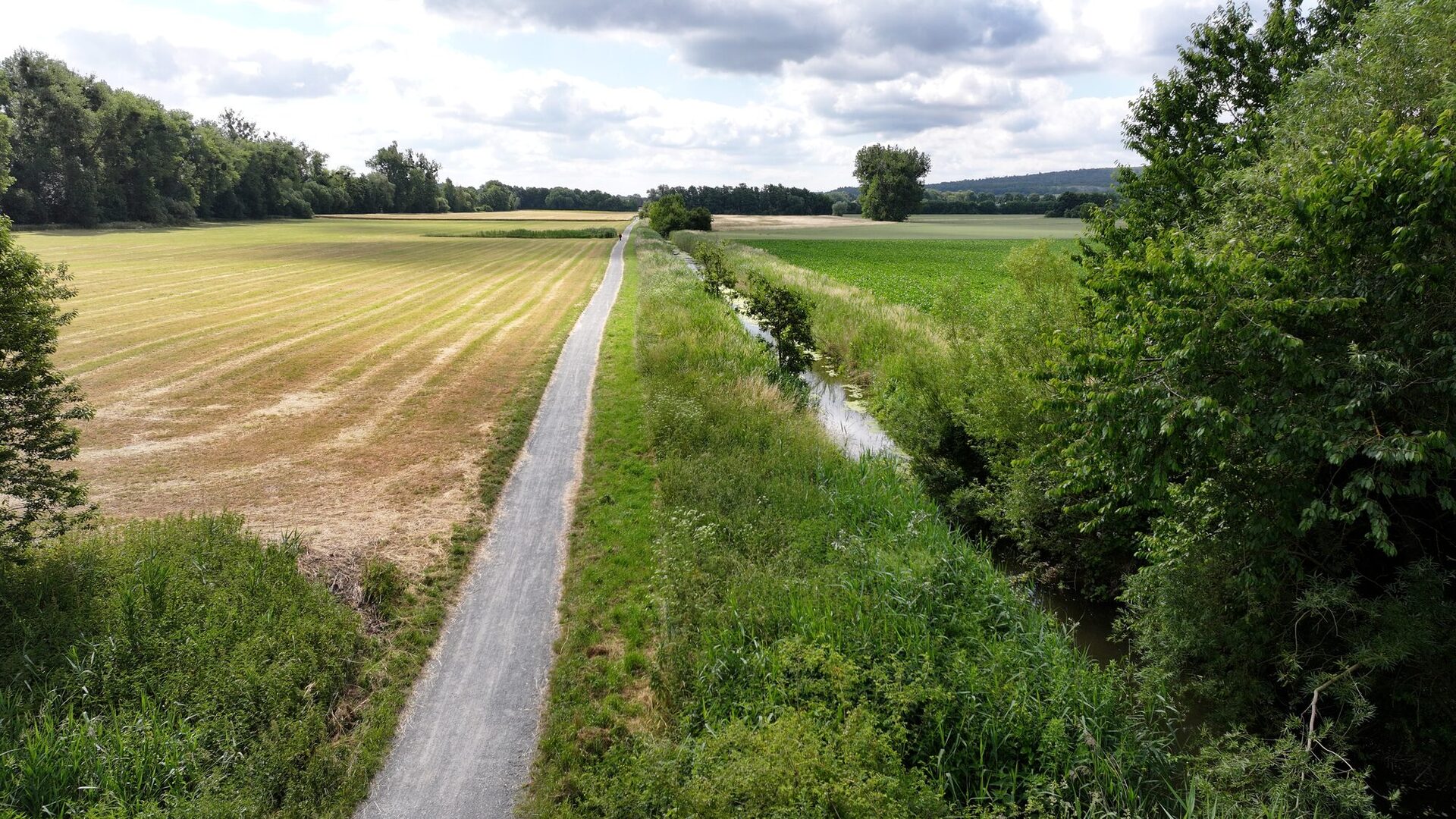
In this section, the Fuhse has been heavily straightened and flows through intensively farmed land. The goal of the near-natural restoration of the watercourse and its floodplain is to activate its inherent potential for development and thereby improve its condition.
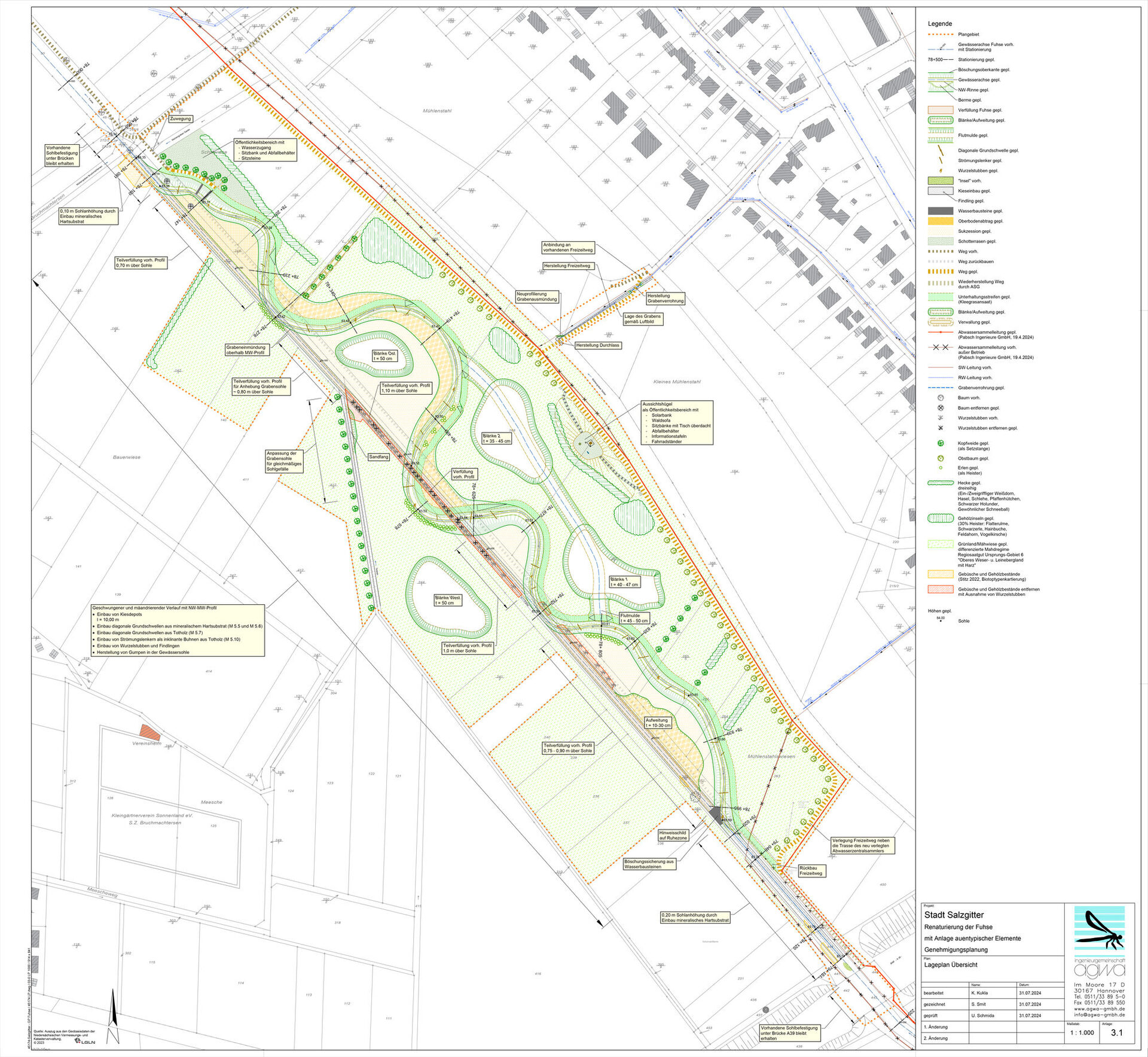
The goal: In this section, the Fuhse will be rerouted to give it more space. In addition, it will be allowed to develop more naturally again.
The long-term goal: Greater nature conservation and species protection in this section.
At the same time, the network of trails for local recreational use is to be redesigned, with a focus on improving the quality of the visitor experience and incorporating aspects of environmental education (as a learning site for daycare centers and schools).
As part of the implementation of the Water Framework Directive (WFD), the Fuhse is classified as a priority water body and must be addressed as a matter of priority. The reason for this is that, according to the Lower Saxony State Agency for Water Management, Coastal Protection, and Nature Conservation (NLWKN), despite its poor condition, the river has the potential for re-colonization and the capacity for the spread of species typical of flowing water bodies.
Costs:
The preparation of the approval planning was funded to 90 percent by state funds from the program of measures for the development of watercourses.
For the subsequent implementation planning and construction, 95% funding was approved for a project as part of the EAFRD measure "Near-natural development of surface waters". This is being carried out with financial support from the European Agricultural Fund for Rural Development (EAFRD) and the state.
This project supports investments in near-natural water development to protect and improve the environmental status of surface waters and seas.
Replacement funds are used for counter-financing, so that the municipal budget is not financially burdened by the renaturation measures.

 read out


