
Lecture "War and peace in Ukraine. Do we know more today than we did a year ago?" on Monday, May 8, from 7:30 to 9 p.m.
About the content:
Fourteen months after the start of the Russian attack on Ukraine, the Ukrainian publicist Kateryna Mishchienko and the Eastern European historian Martin Schulze Wessel want to give an assessment of the situation in a discussion and possibly venture an outlook. How can the effects of the war on European societies be described? And what does this mean for possible future forecasts?
Kateryna Mishchenko (Fellow of the Wissenschaftskolleg 2022/2023) is a Ukrainian author, publisher and curator of contemporary art. She was editor of the online magazine Prostory and co-founder of the Kyiv-based publishing house Medusa. Her publications deal with the political protest culture in Ukraine, among other things. She has published in German: Euromaidan. Was in der Ukraine auf dem Spiel steht (Suhrkamp 2014), Ukrainische Nacht (Spector Books 2015).
Martin Schulze Wessel teaches the history of Eastern and South-Eastern Europe in Munich. Among other things, he is co-chair of the German-Ukrainian Historical Commission and a member of the Bavarian Academy of Sciences and Humanities.
His research topics include the religious history of East-Central and Eastern Europe, the history of empires in Eastern Europe, the social history of Russia in the 19th century, historiography and historical thinking in Russia and transnational relations between Eastern, Central and Western Europe.
The event takes place in cooperation with the Wissenschaftskolleg.
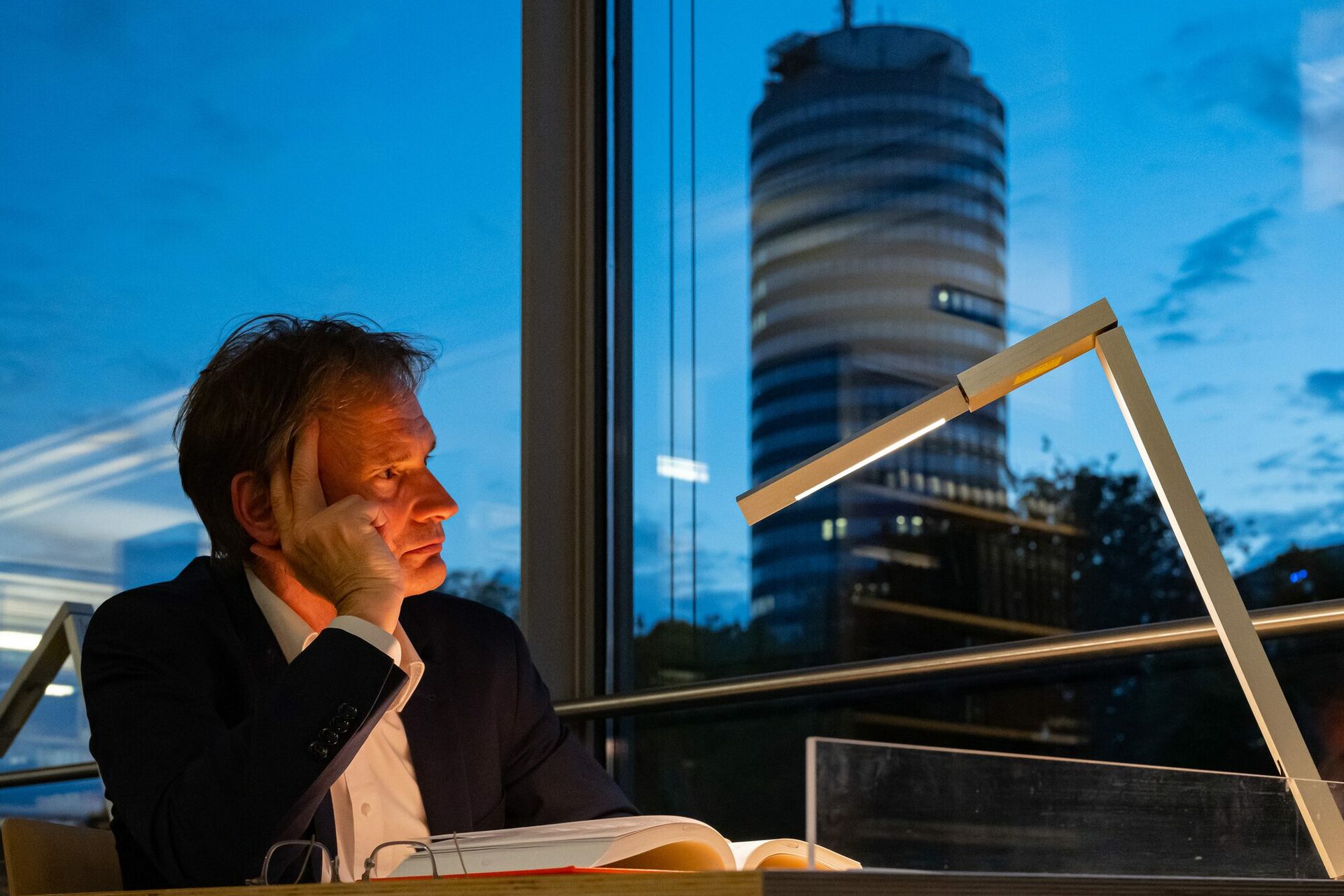
Lecture "Romanticism - the second impulse of European modernism" on Thursday, May 11, from 7.30 to 9 p.m.
About the content:
Romanticism is not a specifically German affair, but a European event that discovered and cultivated the vitality of the imagination. It placed literature and art in the role traditionally held by religion, thus creating an individualized, liberal form of transcendence. With the new quality of the fantastic, it opened up the human psyche with a new urgency. Looking at Germany, Great Britain, France and Italy, the lecture will thus present Romanticism as the second decisive impulse that, after the Enlightenment, has shaped European modernism to this day. What is known as Weimar Classicism is also part of this European Romanticism.
Stefan Matuschek is Professor of Modern German Literature at the Friedrich Schiller University Jena.

Lecture "Ethics of digitalization" on Monday, 22 May, from 7.30 to 9 p.m.
About the content:
Attitudes towards digitalization fluctuate between euphoria and apocalypse: some expect the creation of a new human being who elevates himself to the status of a god. Others fear the loss of freedom and human dignity. In contrast, Wolfgang Huber takes a realistic look at the technological upheaval in this lecture. It starts with language: are "social media" really social? Does a car equipped with digital intelligence drive "autonomously" or is it rather automated? Are algorithms that learn through pattern recognition therefore "intelligent"?
Prof. Dr. Wolfgang Huber was Chairman of the Council of the Protestant Church in Germany and a member of the German Ethics Council. He is involved in the Wittenberg Center for Global Ethics and on the advisory board of the German Cancer Research Center and has received numerous awards, including the Max Friedländer Prize, the Karl Barth Prize and the Reuchlin Prize.