

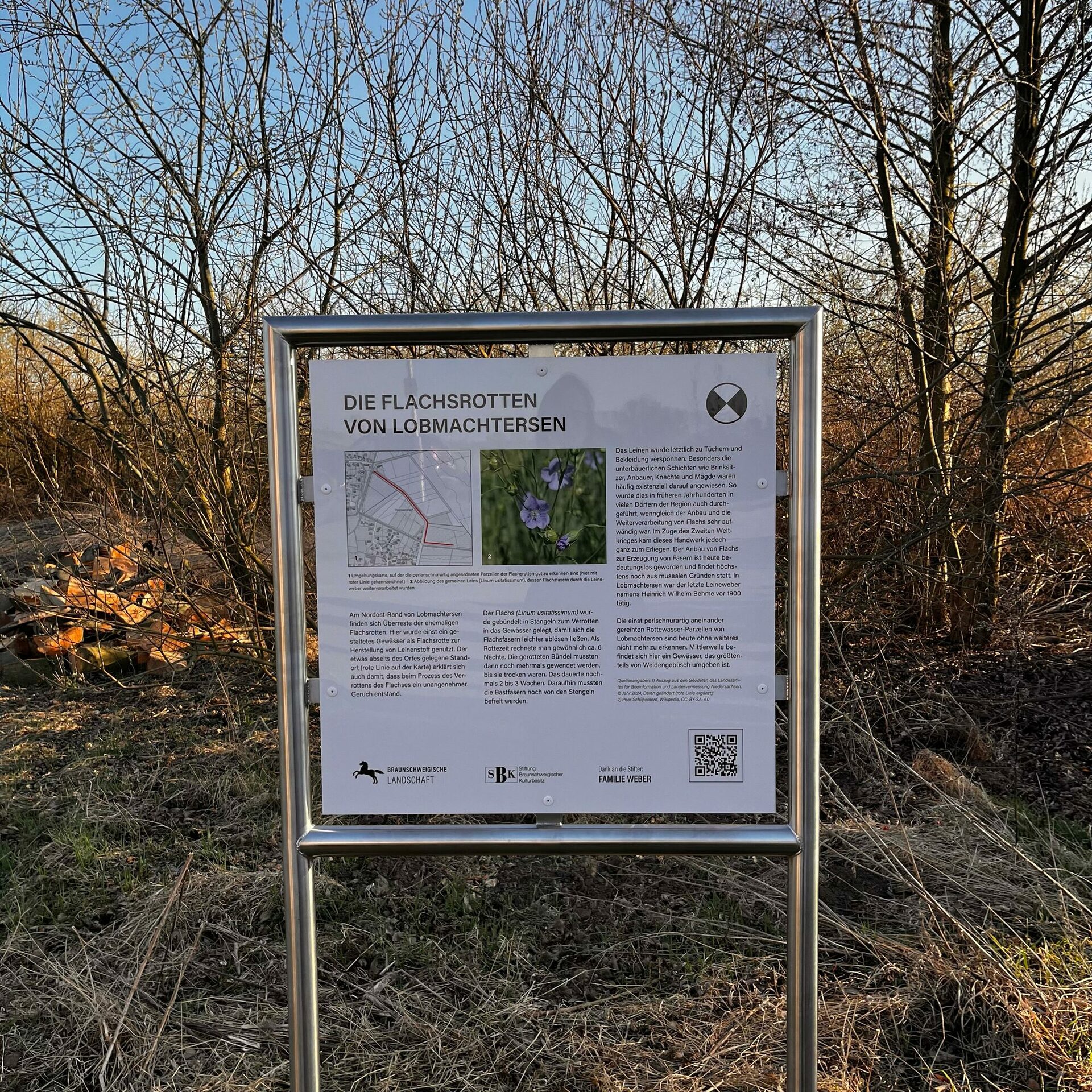
Flax was used to make yarn and linen in the 18th and 19th centuries. However, the plots of rotting water that were once strung together like a string of pearls are no longer recognizable at first glance. The ditch has long since been overgrown with willow bushes.
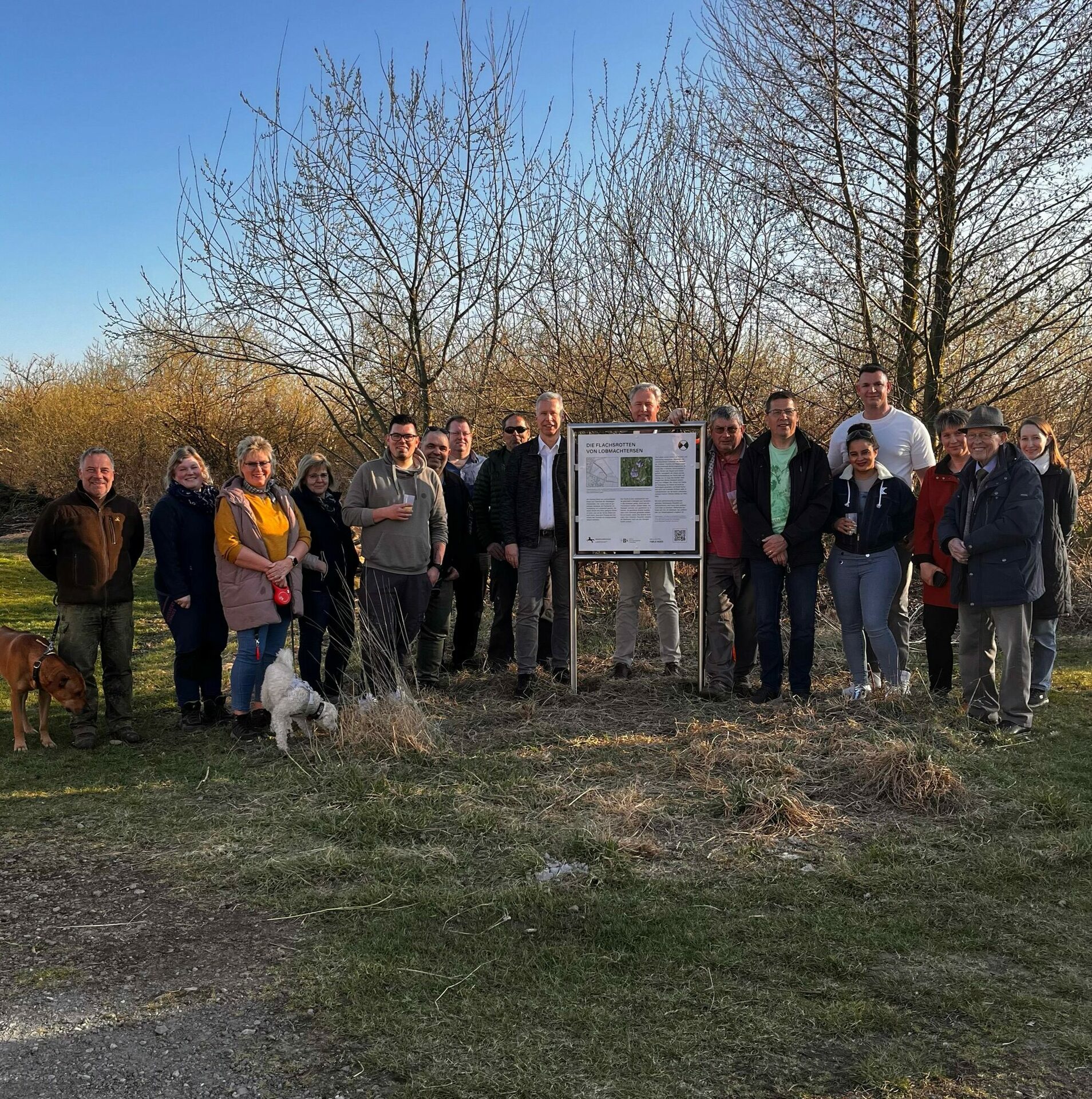
Nevertheless, to draw attention to the site, the Braunschweigische Landschaft local history working group has erected another of its archaeological information boards there. Jörg Karlauf, Ortsheimatpfleger of Lobmachtersen, compiled the information in cooperation with the city archives of the city of Salzgitter. The information board about Lobmachtersen's flax caves was unveiled on March 27, 2025 in the presence of Jan Erik Bohling (Head of Cultural Affairs of the City of Salzgitter), Katrin Helm (City Archive of the City of Salzgitter), Jörg Karlauf (Ortsheimatpfleger Lobmachtersen), Anna Lamprecht (Office Manager Braunschweigische Landschaft e.V.) and Harald Schraepler (Spokesperson of the AG Heimatpflege der Braunschweigischen Landschaft e.V.).
The signs, which have been in place since 1995, invite visitors on exciting journeys of discovery to lesser-known places of regional history in Braunschweig. There are now more than 30 boards with texts, photos and graphics providing information about the background to the places in question. Most of the boards are located along cycle paths or hiking trails and are clearly visible.
What is a flax grotto?
The cultivation and processing of flax was very laborious. However, because poorer sections of the population in particular were dependent on this production of fabric for cloth and clothing, flax caves were set up in many villages in the region.
It took several steps to turn flax into linen. After harvesting the fibers of the stalks, which were up to 70 centimeters long, the so-called flax retting followed. This involved placing the flax in bundles in the water of the flax retting mill for seven to ten days. Boards, brushwood and stones were used to weigh it down. The necessary rotting process under water prepared the flax fibers for detachment from the wooden stalks.
As in Lobmachtersen, the flax rotting pits were located outside the villages because the rotting process produced an unpleasant smell. The bundles then had to be dried for several weeks before they could be processed into bast fibers by linen weavers.
In the 19th century, flax processing in the Duchy of Braunschweig reached its peak due to the onset of industrialization. Nowadays, flax cultivation no longer plays an economic role. The production of flax fibers only has museum significance. The last linen weaver in Lobmachtersen, Heinrich Wilhelm Behme, was active before 1900.
