


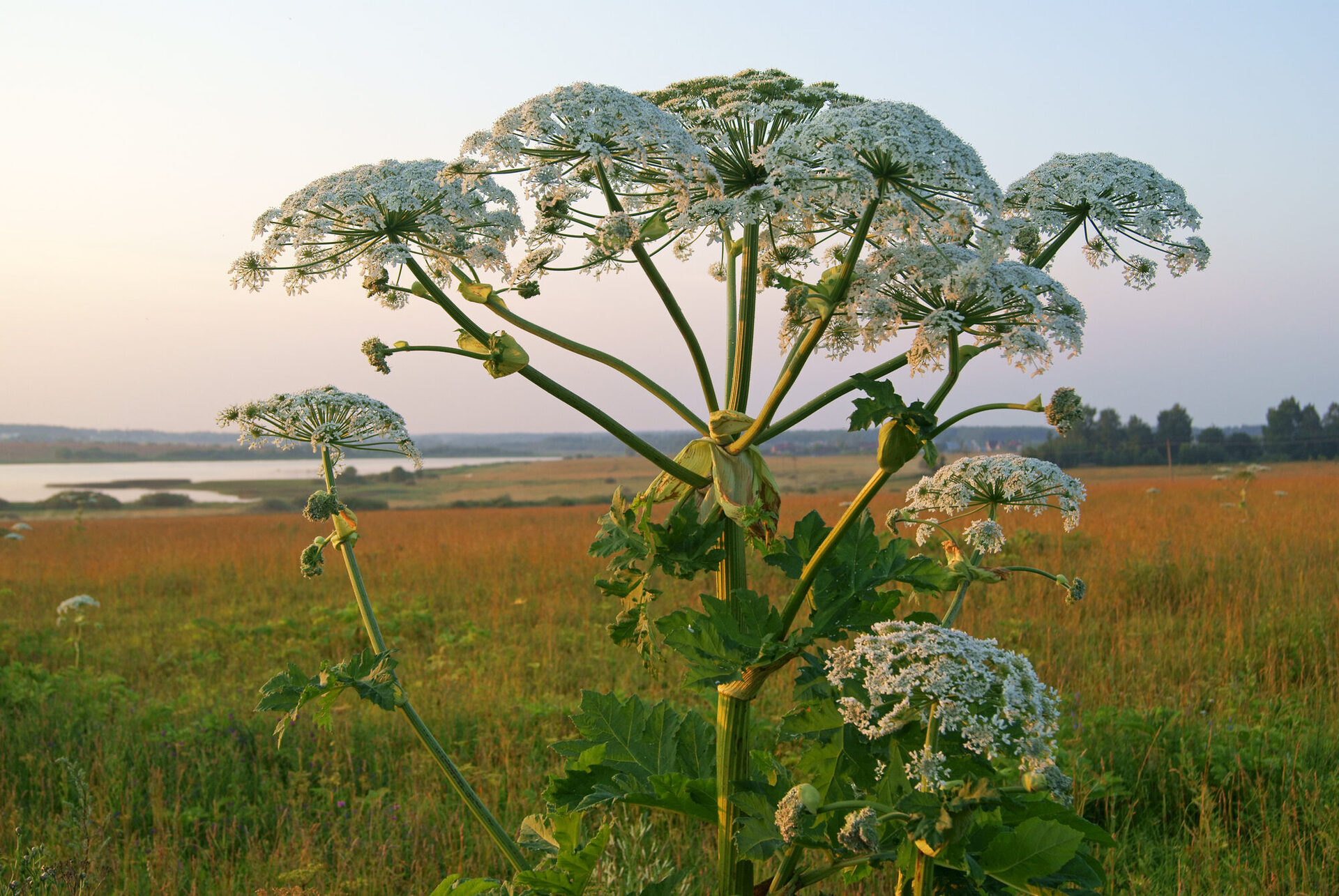
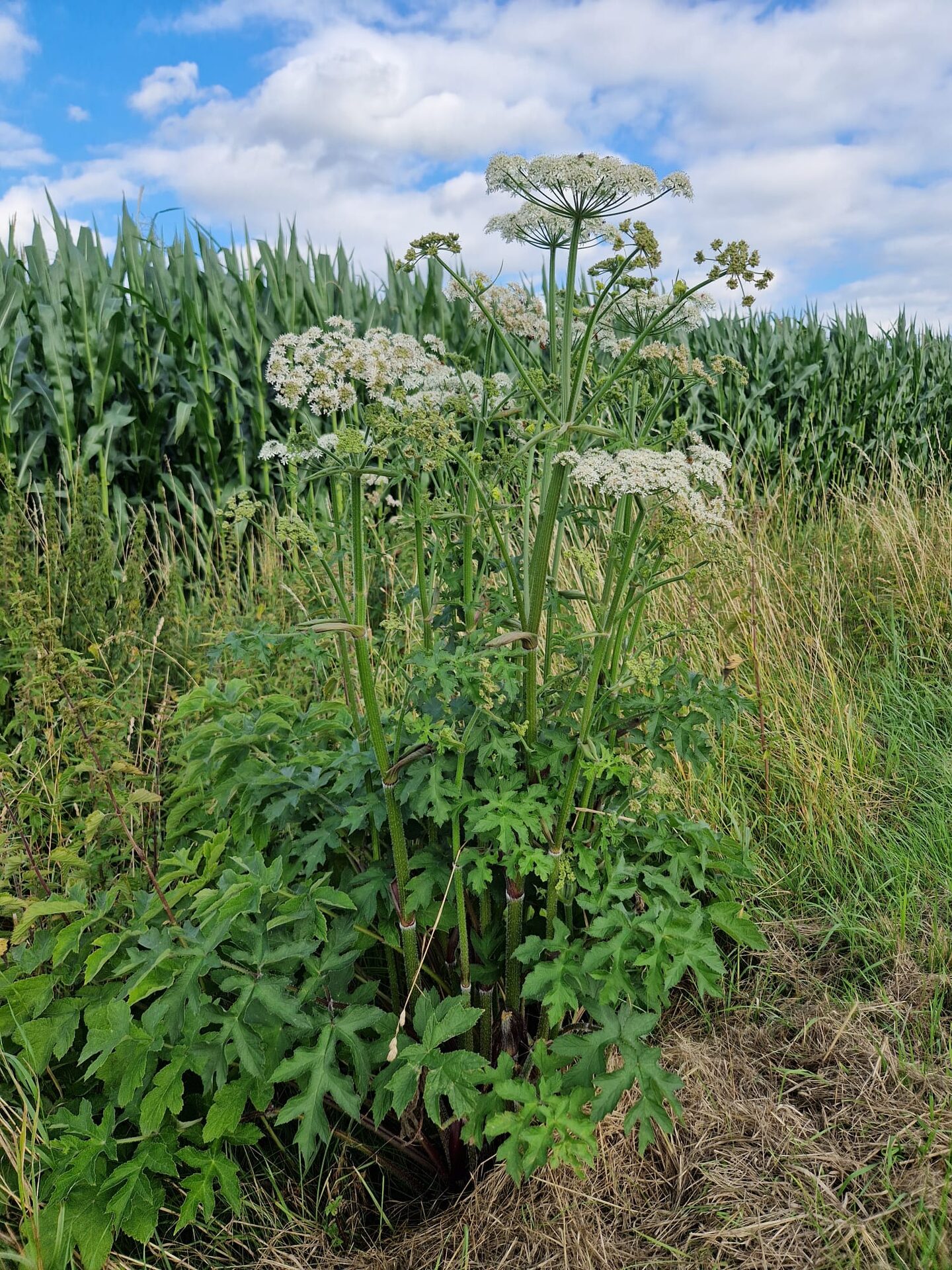
In many places in the city of Salzgitter, the up to 4-meter-high flowering shrubs with their white-flowering umbels and huge rhubarb-like leaves are hard to miss. The starting point was often just a single seedling, which can produce up to 10,000 seeds once it has flowered. These, in turn, can lead to extensive populations of sometimes several hundred square meters within a few years. It prefers moist and light locations such as forest edges, forest clearings, stream and ditch embankments, as well as roadsides and roadsides, grassland and occasionally even arable land.
Dangers for humans
Dangers for nature
From the point of view of nature conservation, it is important that the threatening spread of Hercules creeper poses a threat to other wild plant species. Due to its extraordinarily strong competitive power and sometimes massive encroachment, existing plant populations are displaced and completely changed. Within a short time, the perennial overgrows all inferior species and forms impressive dominant stands, which is a cause for great concern, especially in areas with rare and already endangered species and biocoenoses. Additional problems also occur at the edges of watercourses, where increased erosion can be observed alongside the displacement of typical native riparian shrubs and tall herbaceous plants. And even agriculture is affected when Hercules bushes invade fields, meadows and pastures, in some cases already leading to yield losses.
Difference Between Giant Hogweed and Meadow Hogweed
| Giant hogweed (Hercules weed) | Meadow hogweed | |
| Height | 150 to 300 centimeters | 50 to 150 centimeters |
| Stem | Hollow with red spots | Hollow without reddish spots |
| Leaves | 3 to 5-lobed | Uneven, lobed, blue-green |
| Flower shape | Double umbels, 30 to 50 centimeters in diameter | Plate-shaped single flowers to double umbels, 25 centimeters in diameter |
| Flower color | White to pale pink | White to cream |
| Blooming season | June through July | June through September |
| Toxic? | Yes—the sap is toxic upon skin contact and when exposed to high UV radiation | No |

 read out