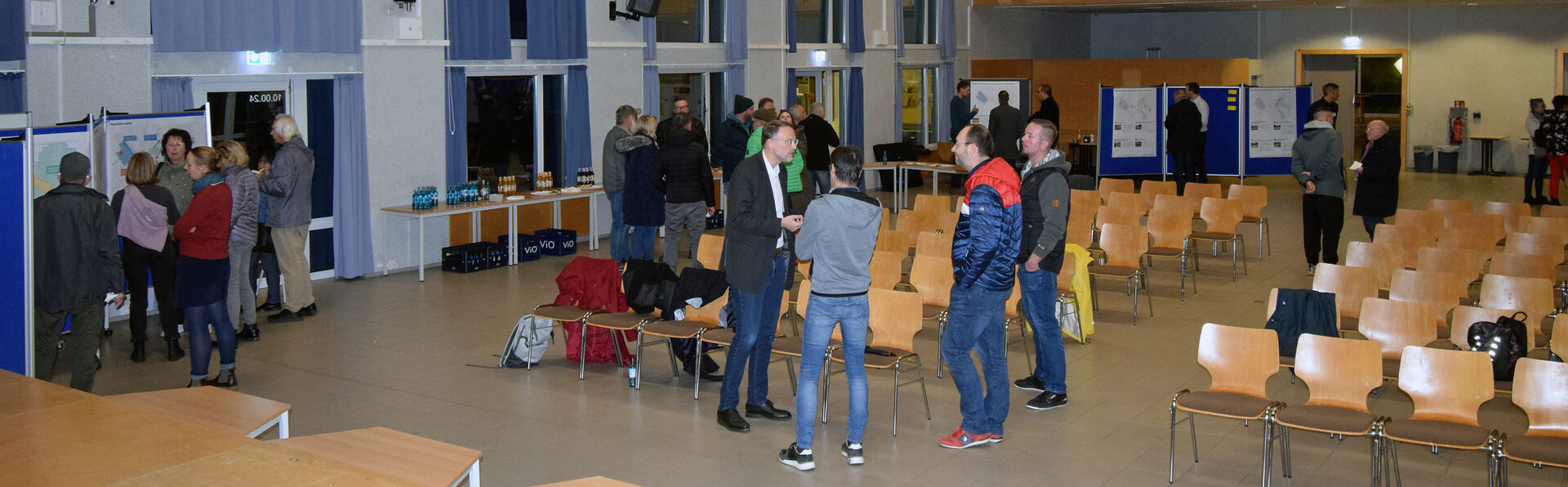
City planning officer Michael Tacke welcomed around 60 residents and thanked them for their cooperation over the past few months. During the kick-off event, the online survey, the neighborhood talks and the discussions with various local stakeholders, there were many ideas, criticisms and suggestions that were incorporated into the "preparatory studies". These are also based on analyses and findings and determine the long-term need for action in the residential districts under consideration.
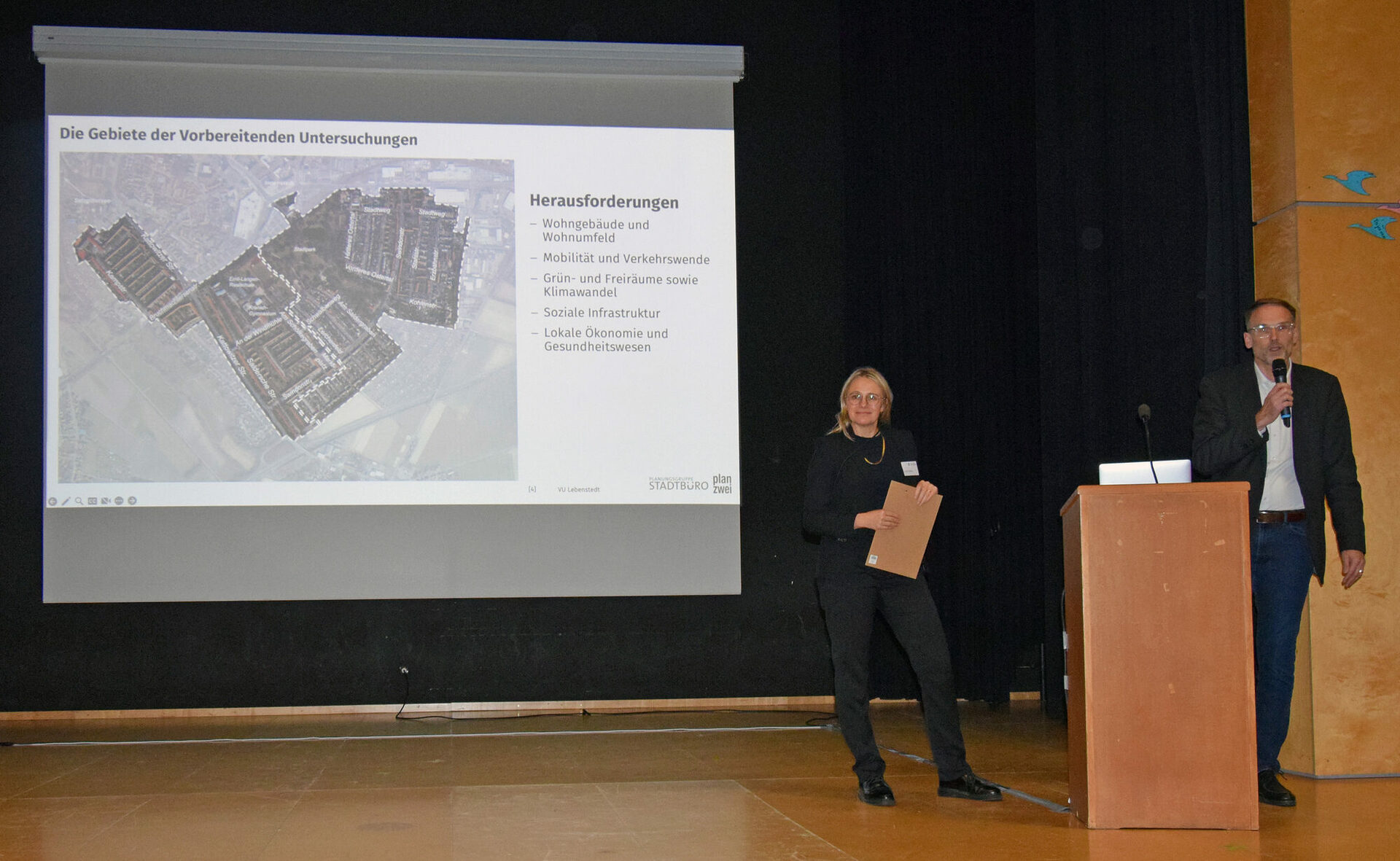
This was explained by Lisa Nieße from the planning office plan zwei: Based on the strengths and weaknesses in the neighborhoods, there are different approaches for future design.
This was also emphasized by Carsten Schäfer from PLANUNGSGRUPPE STADTBÜRO. The aim is to make these residential areas attractive for the future over the next ten to 15 years.
The analyses of the two planning offices have shown that the strengths and weaknesses in the residential districts differ greatly in areas such as "Housing and living environment", "Environment, green and open spaces", "Mobility and traffic" or "Education and social infrastructure" (for details, see presentation).
For this reason, the planning offices recommend defining three different redevelopment areas in order to apply for suitable funding opportunities for the weaknesses and strengths of the residential areas.
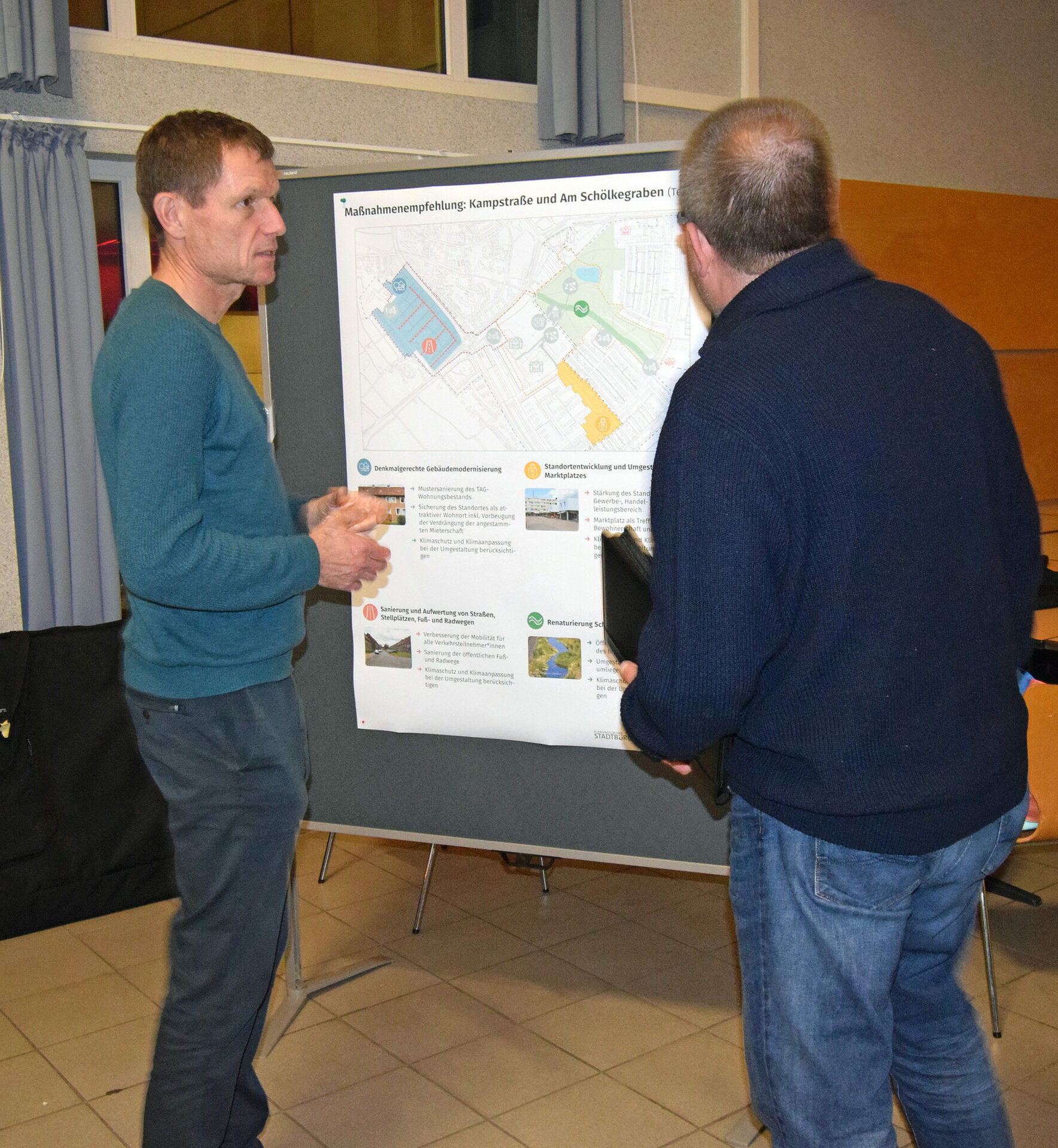
What does this mean in concrete terms?
- A "simplified procedure" for the sub-area around Swindonstrasse (with support options for private investments such as higher tax write-offs for construction measures).
- A "comprehensive procedure" for the sub-area around Schölkegraben (with funding opportunities from urban development funding for measures that contribute to improving the residential and commercial situation).
- A "comprehensive procedure" for the sub-area around Kampstrasse (with funding opportunities from urban development funding for measures that contribute to improving the residential and commercial situation).
What happens next?
The results of the "Measures Forum" will be presented next year to the North Local Council and the Salzgitter City Council, which will have to decide whether the city of Salzgitter should apply to the state of Lower Saxony for urban development funding and other subsidies.
The city of Salzgitter can only take further steps with the people in the residential areas once the state has given its approval.
If a possible first application in 2024 does not work out, the city of Salzgitter can also apply for funding again in subsequent years.
Anyone with questions can contact the Department for Urban Redevelopment and Social City, Mr. Bittner/Mrs. Hänsch (mail: stadtumbaustadt.salzgitterde or phone: 05341/839-3386 or 839-3523). If you would like to have the presentation sent to you, you can also contact the Department for Urban Redevelopment and Social City.
The presentation can be accessed herePDF-File11,13 MB
. read out