"It is important to deal with German history in order to learn from the past for the present and future and to strengthen historical and political awareness," said Frank Klingebiel, who, as Chairman of the Salzgitter District Association of the German War Graves Commission, supports various Volksbund projects in schools, such as memorial plaques in cemeteries and house and street collections.
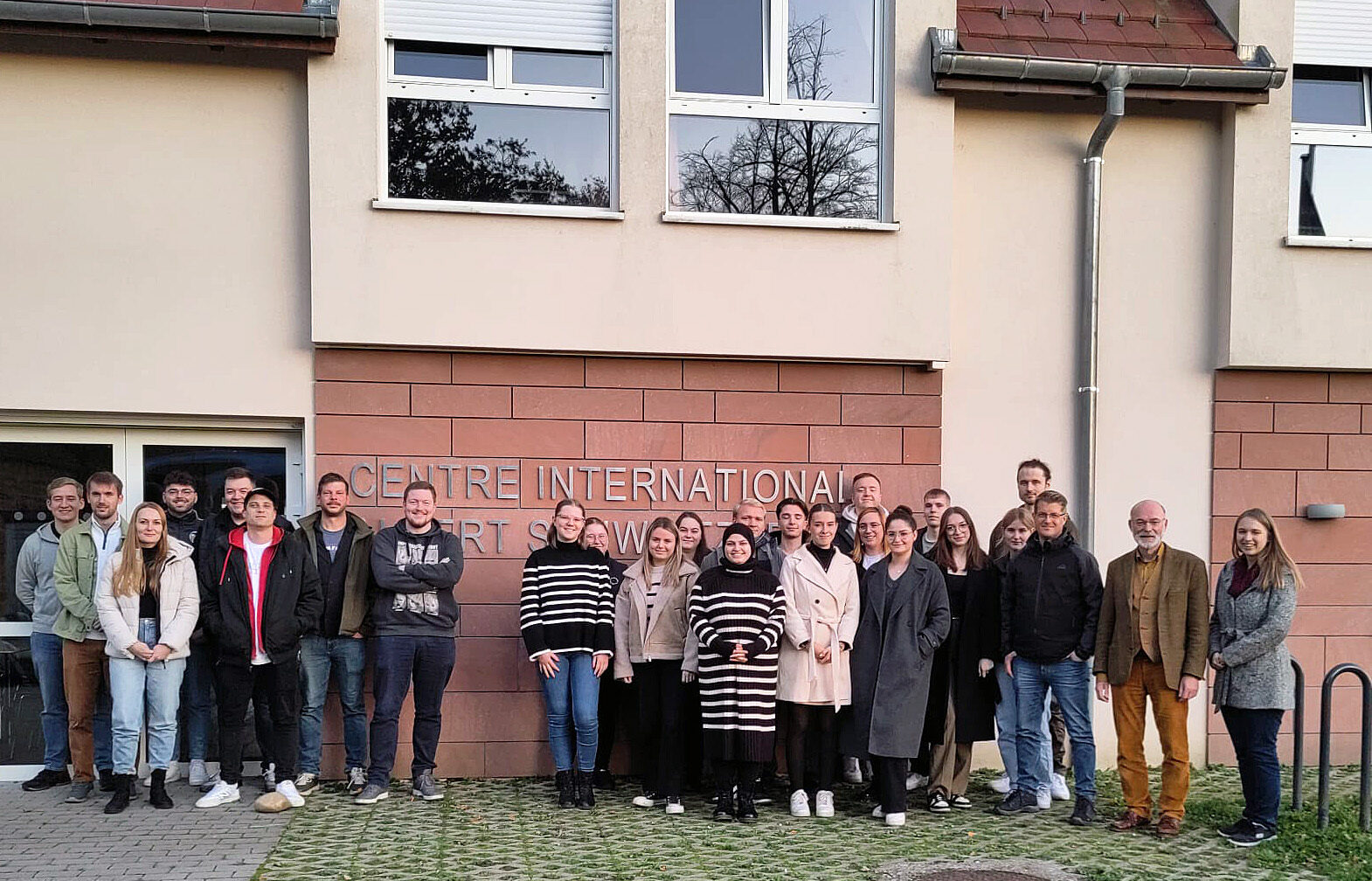
The study trip to the International Youth Meeting Centre in Upper Alsace in Niederbronn-les-Bains, organized in cooperation with the German War Graves Commission in Braunschweig, was accompanied by education officer Dr Rainer Bendick and a team from the City of Salzgitter's Personnel and Organization Department. The Lower Saxony Ministry for European and Federal Affairs and the Volksbund Foundation sponsored the trip.
During their five-day stay, the junior staff explored the nearby war cemetery and learned about the biographies of various soldiers. One gravestone with euro coins stood out in particular. It is the grave of August Waigel, who was killed in the war at the age of 19. His younger brother Theodor was hit hard by the loss. As German finance minister, he was one of the fathers of the euro, who campaigned for the rapprochement of European nations and commonalities such as the currency.
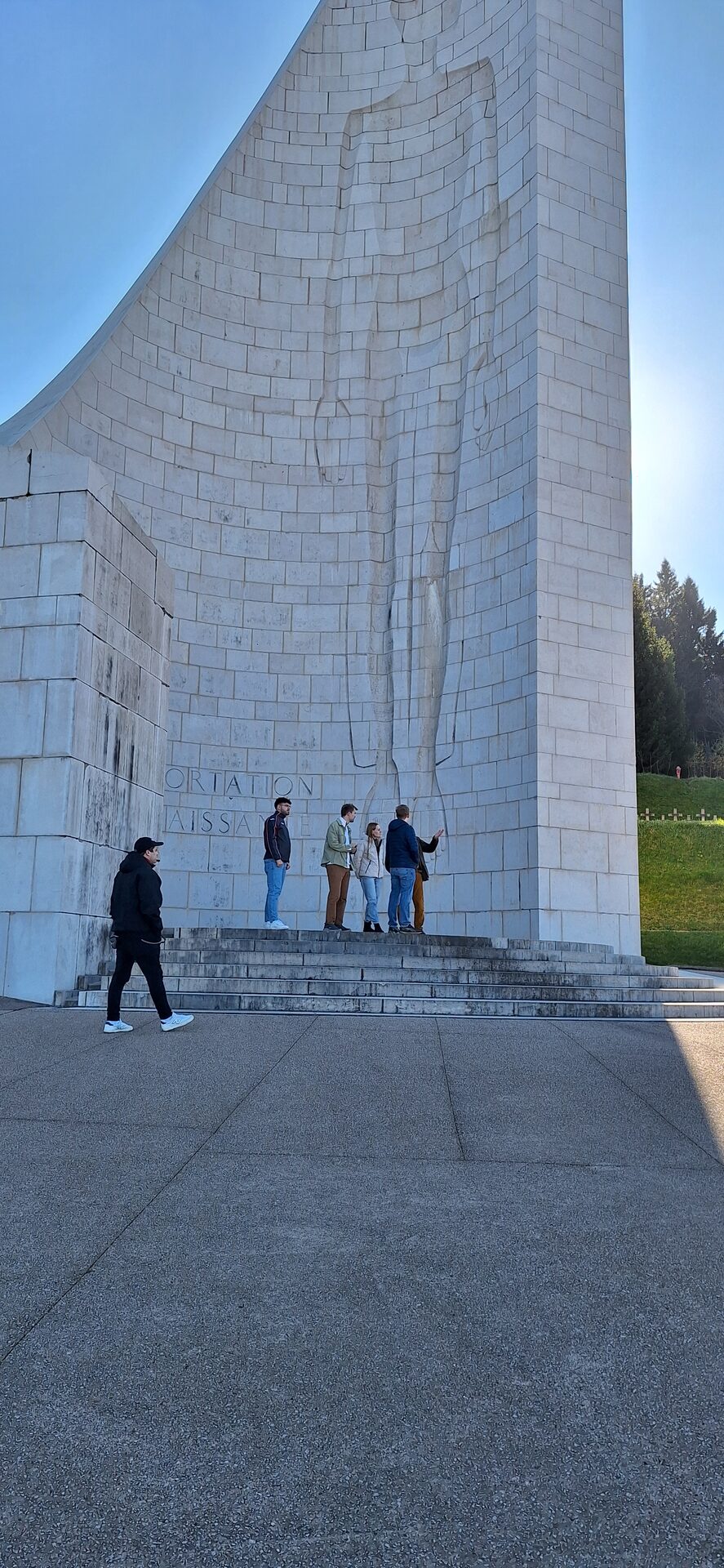
On the second day, the group visited Verdun. One of the bloodiest battles of the First World War took place on the outskirts of the city. Around 700,000 people died fighting for a few hundred meters of ground. At Fort Douaumont, in the destroyed village of Bezonvaux or in the ossuary, where the remains of 130,000 unidentified dead rest, the trainees saw the immense destruction and the misery of the soldiers. But they also got to know the place where German Chancellor Helmut Kohl and French President François Mitterand shook hands in 1984. Jan Wahnschaffe, an administrative assistant in training, was deeply impressed. "I now realize the full cruelty of the war and the importance of Franco-German reconciliation."
Another stop was the former Natzweiler-Struthof concentration camp in Alsace, which is now a memorial site and was visited on the third day.
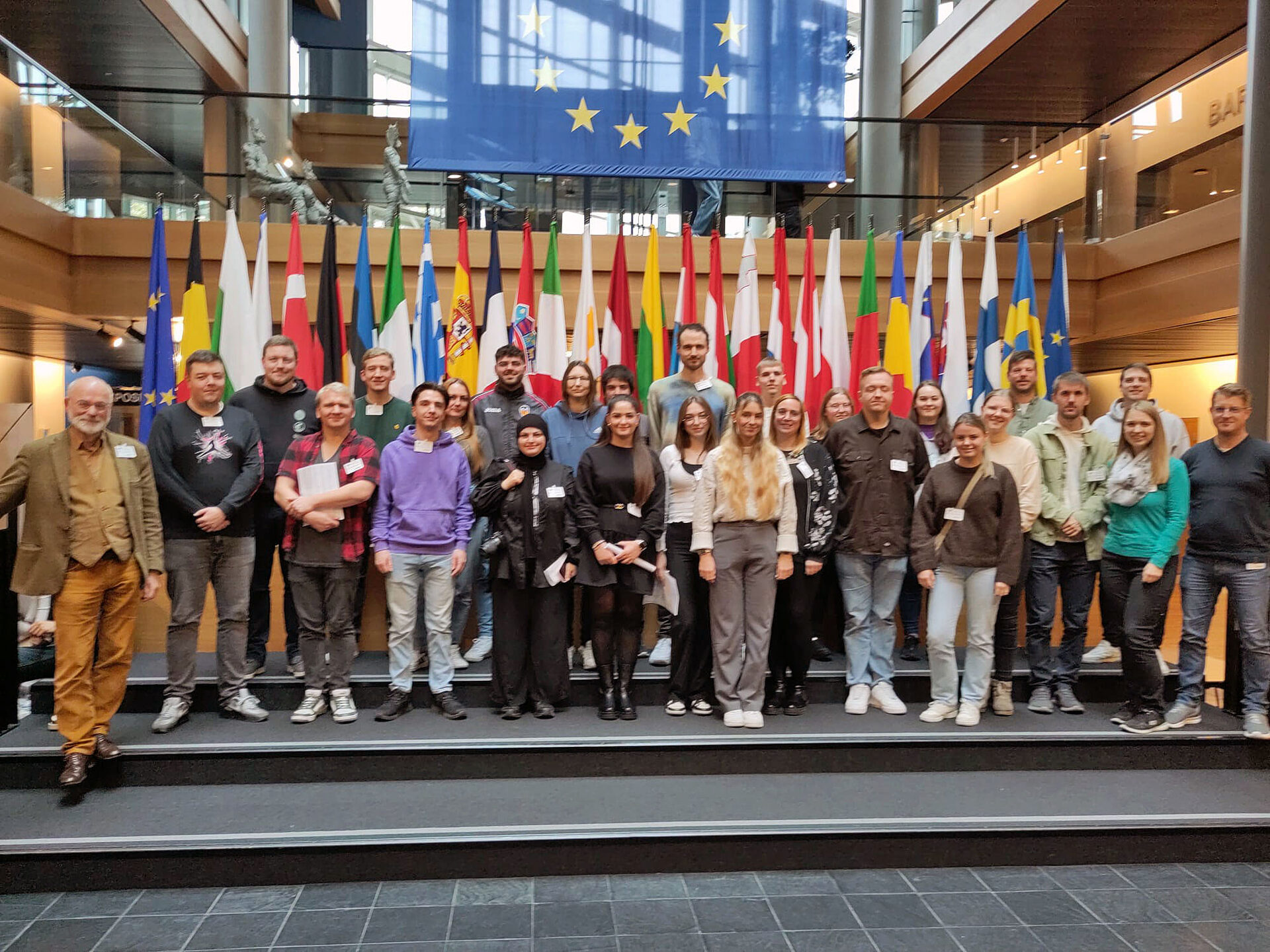
The study trip ended in Strasbourg with a visit to the European Parliament. After getting to know the old Europe of nationalisms and wars, the trainees now experienced how conflicts are resolved peacefully in the European Union today through ever new compromises.
The feedback has shown Matthias Weber, Head of Training at the City of Salzgitter, how much this study trip has sensitized the trainees and how important this trip was for the transfer of knowledge, awareness and daily interaction with each other.
The study trip was a valuable addition to the regular training content. It not only promotes learning during the training, but also strengthens the sense of community among the participants. In view of this, we are already considering when and in what form such a trip can be repeated with the future junior staff.