Salzgitter = diversity

The city of Salzgitter is charmingly nestled in the foothills of the Harz Mountains in Lower Saxony. Its 31 districts are surrounded by forests and fields, so it is only a short distance to nature anywhere in the city.
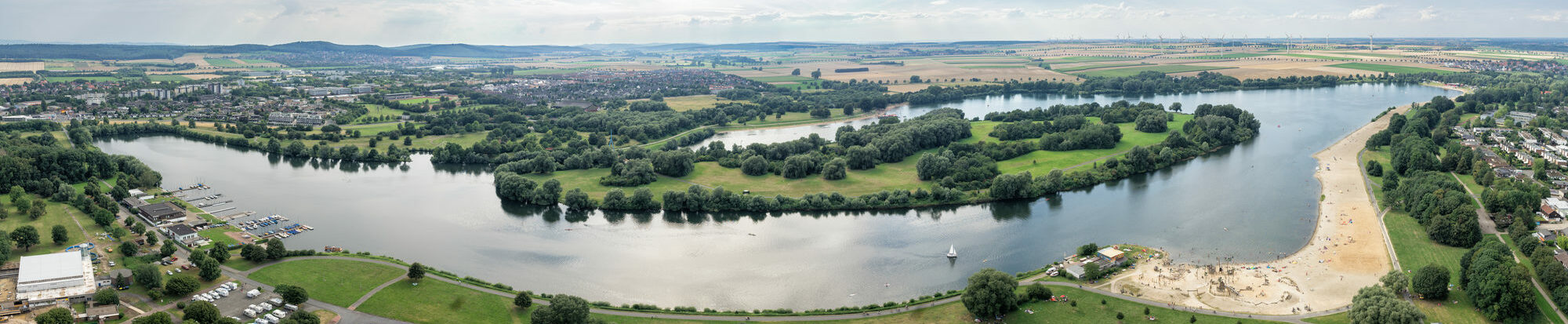
Salzgittersee is one of the city's flagship attractions. It is "the" water sports center of the region and is located in the immediate vicinity of the city center of Lebenstedt. This modern and largest district is connected to the historic Salzgitter-Bad via the Salzgitter-Höhenzug, which is ideal for hiking and cycling. There, in the second largest district and spa town, half-timbered houses characterize the charming townscape. But there are also many small villages with a rural character that add to the special charm of this town.
Salzgitter is characterized by a wide range of leisure activities close to nature and a supra-regional cultural programme. The numerous community festivals, concerts, theater performances and exhibitions invite you to spend your free time in a colorful and varied way.
The city's economic structure, which is characterized by the so-called "Big Five" (five major international companies) and a strong small and medium-sized business sector, is one of the strongest in the region and thus secures jobs at a high level in this family-friendly city.
On the trail of history

Salzgitter is part of a culturally and historically exciting region between the Harz Mountains and the Heath. The town owes its name to the salt boilers who settled near the salt well in today's Salzgitter-Bad in the first half of the 14th century and thus founded the town of Salzgitter. In addition to salt, iron ore was another valuable natural resource that shaped the development of the town.
However, Salzgitter's history goes back even further: 50,000 years ago, an "early Lower Saxon" found his way to Salzgitter as an Ice Age hunter. His remains were discovered in 1952. An even older inhabitant was the ichthyosaur, which lived here 115 million years ago and whose skeleton was found underground during mining in 1941.
The town was actually founded on April 1, 1942. Mining, the founding of the "Reichswerke Hermann Göring" steelworks in 1937 and agriculture, in particular the good soil for sugar beet cultivation, shaped the early development of the town.
The history of the town of Salzgitter is summarized on the Stadtmonument in the middle of the pedestrian zone in Lebenstedt. In the form of sculptures and scenes, the monument not only shows the fate of those conscripted to work in the steel industry during the Second World War, but also the influx of thousands of refugees and displaced persons after 1945 who came to Salzgitter to find a new home here. It also commemorates the dismantling of industrial plants by the Allies after 1945 and the resistance of workers against this dismantling at the time. Finally, the top of the monument shows the successful development of the city into the third largest industrial location in Lower Saxony.
Quality of life thanks to varied leisure activities

There are many opportunities for leisure activities in Salzgitter. An abundance of sports facilities, public leisure facilities, barbecue areas, motorhome pitches, swimming pools and green spaces make the leisure offerings unique and varied. For almost all sports, outdoor training starts right on the doorstep.
The city of Salzgitter, which covers an area of almost 224 square kilometers, offers plenty of space for hiking and cycling through extensive forests and charming fields. Signposted themed cycle routes lead to the most beautiful parts of the city. The Salzgitter-Höhenzug is a popular hiking area. It stretches from Baddeckenstedt to Liebenburg over 25 kilometers on the southern edge of Salzgitter. There are over 150 kilometers of hiking trails with refreshment stops in the hilly forest area. On Geopfads in Salzgitter-Bad and Lichtenberg, which are circular hiking trails through the beech forests of the Salzgitter-Höhenzug nature reserve, you can learn a lot about Salzgitter's geological history.
A full-scale representation of the solar system can be viewed on the planet tour from Salzgittersee via Lichtenberg to Altenhagen. The rock nature trail in Gebhardshagen provides information about various rocks from northern Germany.
The ice rink on Salzgittersee with its 1,800 square meter ice surface is a top address for ice hockey, figure skating and curling. In summer, the ice rink offers space for up to 5,500 visitors for music events for all generations and small trade fairs.
Golfers get their money's worth in the Salzgitter-Bad district. The scenic and challenging 18-hole golf course is an ideal place to play this sport in a relaxed environment. This sporting activity is often combined with a stay at the Thermalsolbad.
In addition to a wide range of sports activities, many festivals, concerts and high-class events enrich the life of the town. They bring together sociable Salzgitter residents and guests throughout the year. One highlight is the Kultursommer at Salder Castle - all live and in the open air with stars from the music and cabaret scene.
Special attractions for locals and visitors alike are the Cityfest in Lebenstedt and the Altstadtfest in Salzgitter-Bad. The medieval festivals have a historical feel. We recommend the museum festival in Salder every year on Mother's Day and the medieval market at Gebhardshagen moated castle.
At Salzgittersee, the dragon boat race, torchlight swimming or the gliding days at the glider airfield with the balloon glow attract many visitors.
Special cultural events can also be enjoyed in historic event spaces. The Kulturscheune in Lebenstedt, the Fürstensaal in Salder Castle or the stables of Gebhardshagen moated castle as well as a former place of worship, the Kniestedt church, are all popular venues for cabaret, music and cabaret. Classical theater is performed on the stages of two school auditoriums, where renowned actors regularly make guest appearances.
Water sports center and local recreation on Salzgittersee

Salzgittersee is "the" water sports center of south-eastern Lower Saxony. Construction began in 1960 and since its opening for swimming and water sports in May 1963, its importance as a local recreation area with a wide range of leisure and sports facilities has steadily increased. With an area of 75 hectares and a north-south extension of 2,120 meters, it is a popular spot for sailors, surfers, rowers and canoeists. The 1,600-metre-long beach and the excellent water quality allow for untroubled bathing fun for everyone. Cyclists, anglers, divers and model boat enthusiasts also enjoy the lake. The Salzgittersee's haven of peace is its island. It offers relaxation while walking, invites you to view fine art by nationally renowned artists or encourages you to play a round of disc golf.
The asphalted motorhome site is equipped with electricity and running water, has wide access roads with good surface drainage and ideal transport connections and offers space for twelve mobile homes.
The most attractive playground in the region is the pirate camp. Here, children of all ages can conquer a beached pirate ship and discover the numerous climbing and sliding opportunities. A sporting attraction is the water ski cableway on the western shore of Salzgittersee with its 800-metre-long circuit.
There are free leisure facilities such as a running track and pitches for tennis, soccer, roller field hockey, handball and basketball. The east beach offers bathing facilities and the opportunity to play beach volleyball.
An indoor and outdoor swimming pool, an ice rink, a stadium, a gliding field, tennis courts and barbecue areas as well as pedal boat and canoe hire complete the diverse range of facilities.
The members of the German Life Saving Association (DLRG) ensure the safety of visitors. They perform over 3,500 hours of lifeguard duty at Salzgittersee every year. The lifeguard station is equipped with 4 motor lifeboats, among other things.
Regular events at Salzgittersee that are known beyond the region include the New Year's Eve run with more than 1,000 running enthusiasts from all over the region, the Volkstriathlon, the torchlight swim, the flying days, the dragon boat race, rowing competitions and the lake festival organized by clubs as a civic and family festival.
Further information about the Salzgittersee
Salzgitter-Bad - a health resort with tradition

Salzgitter-Bad, the second largest district, is worth a visit as a state-approved town with a brine spa. As the town's namesake, the spa was the center of the region until the 1940s. The "salina gethere" was mentioned in documents as early as 1125. In 1942, Salzgitter became part of the new district-free city of Salzgitter. The district has been called "Salzgitter-Bad" since 1951.
The terms "recreation" and "health" have long been closely associated with Salzgitter-Bad. In addition to salt production, the "Solbad Salzgitter" spa was established in 1879. In 1911, a spacious, modern bathhouse was built in the spa garden, today's rose garden.
The Thermalsolbad Salzgitter-Bad, located in the middle of the local recreation area and above the Greifpark, is one of the most beautiful baths between the Harz Mountains and the Heath. With its combination of thermal brine wave pool, sauna area, fitness center and physiotherapy practice, it offers a unique range of facilities. Plenty of space for rest and relaxation, the wonderful location, modern and tried-and-tested treatment methods make the Thermalsolbad a health center. A 25 percent natural brine, one of the strongest in Central Europe, bubbles up from a depth of 243 meters. It flows directly from the spring in the rose garden into the Thermalsolbad.
Bathing in the well-tempered brine water is balm for the skin and soul.
The old town of Salzgitter-Bad is particularly worth seeing with its winding alleyways and squares and many listed buildings. These include the Ratskeller on the market square, the fortress church of St. Mariae-Jakobi with its massive fortified tower, the ruins of the Vöppstedt church and the oldest half-timbered house in the rose garden, the Kniestedter Gutshaus. The rose garden attracts visitors to linger, especially in summer, with its magnificent flowers. The healthy brine can be inhaled directly at the graduation pavilion.
The historic old town, with its lovingly restored half-timbered houses, invites you to stroll and linger. The owner-managed retail trade offers a wide range of individual goods, and the cafés and restaurants round off a visit to the picturesque old town.
The colorful program of events attracts many visitors to the district throughout the year. These include the nationally renowned Old Town Festival as well as the Klesmer and World Music Festival, the Wine Festival and the special cabaret program in the Kniestedt church with its extraordinary ambience.
For art lovers, the sculpture trail is well worth a visit. Nine steel art objects can be found in the Kurpark am Greif area and along the golf course to Liebenburg.
Salzgitter-Bad is embedded in the Salzgitter mountain range and therefore offers a good starting point for extensive hikes in varied nature with wonderful viewpoints such as the Bismarck Tower, which offers a view of the northern Harz foreland.
Salder Castle Municipal Museum

Salder Castle was built in 1608 in the Weser Renaissance style. The building once served as a summer and hunting residence and as the widow's seat of the Guelphs, and later as the domain of the Dukes of Brunswick.
In 1962, the city of Salzgitter opened the municipal museum here. Its permanent exhibitions deal with the history of Salzgitter from its geological foundations to the modern city in the 20th century.
There is also an exhibition of historical toys from the past 200 years. The museum also shows the economic and technical development of Salzgitter and the area between the Harz Mountains and Heath in the 19th and 20th centuries.
In addition to the permanent exhibitions, there are a number of temporary and special exhibitions. For example, the "Fine Arts" department presents the exhibition "Salon Salder - New Art from Lower Saxony", an overview exhibition of contemporary art from northern Germany, every year in the museum's former "cowshed".
Outside the museum buildings, the bakehouse and the windmill in the mill garden, the Eiszeitgarten and sculptures by nationally and internationally recognized sculptors invite visitors to look and linger.
The Fürstensaal in the main building provides a magnificent backdrop for cultural events (lectures, concerts) and is used as a branch of the registry office for weddings.
The museum is visitor-oriented and sees itself as a place of learning. For kindergartens and school classes of all ages, it offers an extensive range of different themed areas. In combination with the outdoor areas in the Eiszeitgarten and the mill garden, old crafts and early techniques can be experienced.
Children between the ages of 5 and 12 have the opportunity to celebrate their birthday in the museum. In a two-hour themed event, they and their guests first learn about the museum's contents and then gain their own experiences through games, crafts and handicrafts.
Since 2007, the Salder Castle Municipal Museum has been the information center of the "Geopark Harz. Braunschweiger Land. Ostfalen", which was awarded UNESCO Global Geopark status in 2015.
Culturally valuable in all eras
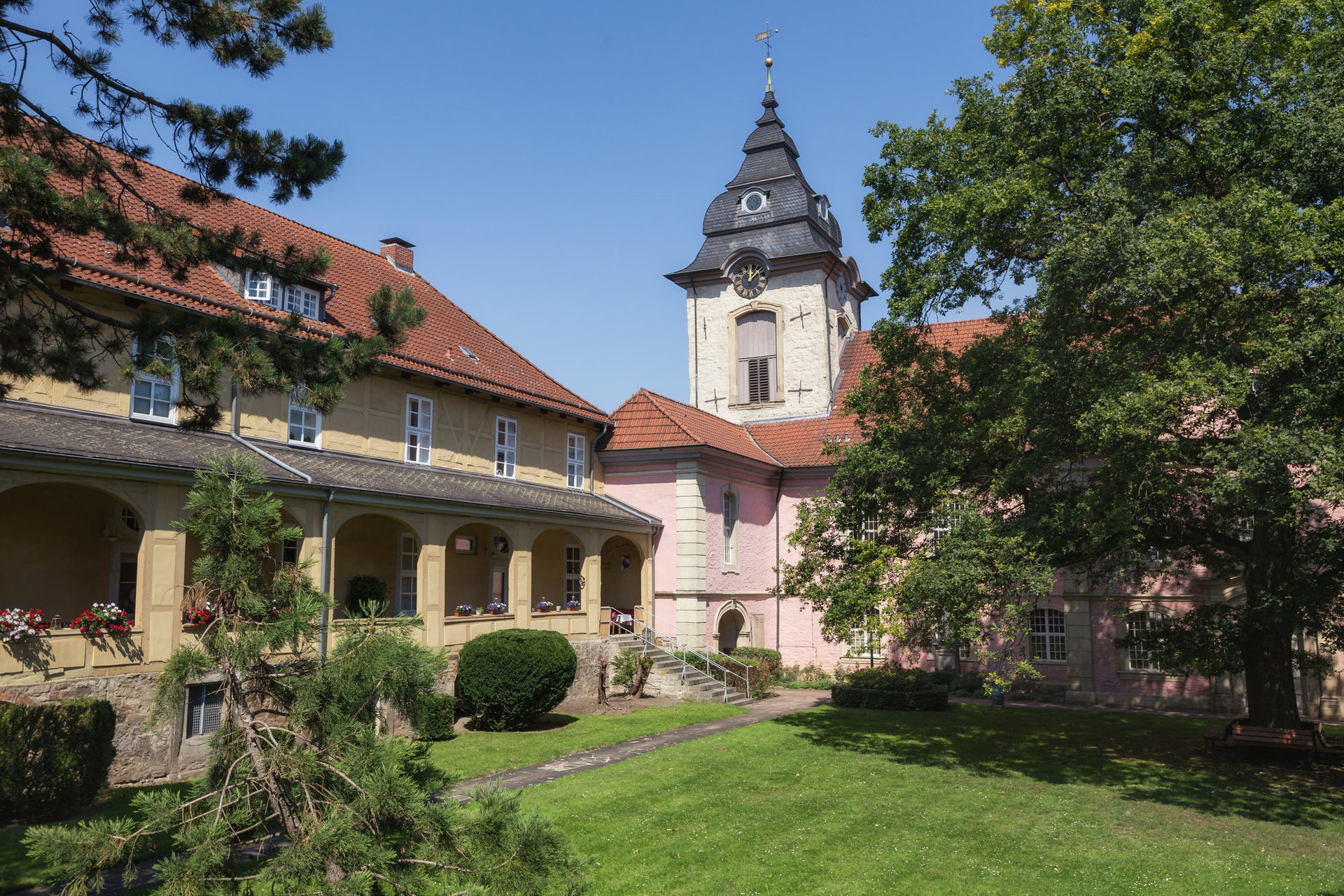
In addition to Salder Castle, there are many other places of cultural and historical interest to discover as witnesses to times gone by.
Henry the Lion's Lichtenberg Castle has always been a special place due to its geographical location. Situated on a steep hilltop, it was used by the Duke of Guelph to secure his power. Today, the exposed parts of the building and the imposing keep with its permanent exhibition bear witness to the castle's history. The magnificent view from the keep makes the castle ruins a popular excursion destination.
If you want to explore even older witnesses of medieval architecture, visit the moated castle in Gebhardshagen, built around the year 1000. It is one of the oldest in the Braunschweig region. In 1406, the troops of the Bishop of Hildesheim destroyed most of the castle. On behalf of the Dukes of Brunswick, the most important parts, especially the arsenal and the towers, were then rebuilt. The castle was surrounded by a moat until the 19th century. Every year, a medieval festival on the grounds brings the past back to life.
Steterburg Abbey also has its origins in the Middle Ages. Steterburg Abbey was built around the year 1000 on the site of the ruined early medieval Steterburg Castle. The oldest surviving parts of the building date back to the 11th century. One of the most important sacred buildings in Salzgitter is the church of the Damenstift.
The baroque church in Ringelheim, built in 1694, is a gem with its valuable organ. The Ringelheim Organ Festival, which is known far beyond the city limits, takes place here. In 1817, the Hanoverian General Field Master Count von der Decken acquired the estate and former monastery. Extensions and additions to the main building transformed the estate into a palatial manor house.
Flachstöckheim, located in the eastern part of the town, was for a long time the seat of one of the richest noble families in the Brunswick region, the von Schwicheldt family. As early as 1350, the knightly family received the estate as a fief from the Hildesheim Abbey. The estate was built in 1722. The Kavaliershaus dates back to 1807. In the estate park, the former English garden of the noble family, there is now an open-air stage where concerts and children's theater are performed.
World-class economy

Salzgitter is the third largest industrial location in Lower Saxony. As a regional center with around 106,000 inhabitants, the city is located in the Hanover - Braunschweig - Göttingen city triangle and thus in the middle of Europe. Thanks to its good location and excellent infrastructure, Salzgitter is easy to reach from all directions: With several junctions, Salzgitter is located directly on the A39 highway and in close proximity to the north-south axis A7 with the west-east axis A2. The rail facilities of Verkehrsbetriebe Peine-Salzgitter GmbH have a direct connection to the Deutsche Bahn network.
Salzgitter is connected to supra-regional shipping traffic via the Ems, Weser and Elbe rivers thanks to the busy inland port of Salzgitter-Beddingen with its direct connection to the Mittelland Canal. Hanover International Airport and the regional and research airport Braunschweig/Wolfsburg are less than an hour away.
The economic structure is characterized by the topic of "mobility". The city is home to five world-class companies with an international focus - the so-called "Big Five". These include Salzgitter AG, Alstom Transport Deutschland GmbH, MAN Truck & Bus AG, Volkswagen AG and Robert Bosch Elektronik GmbH. Many people from Salzgitter and the region are employed by these companies.
The city's economic strength is also based on a healthy and strong SME sector, modern skilled trades and companies in the research and services sector. In addition to the industrial and commercial areas, high-quality soils enable high-performance agriculture.
The Federal Office for Radiation Protection, a federal authority, has its headquarters in Salzgitter.
Salzgitter - family-friendly

Salzgitter is increasingly developing into one of the most child- and family-friendly cities in Germany. The city regards child and family friendliness as an important location factor. Many measures make life and living in Salzgitter attractive for families. There are outstanding adventure playgrounds in the city, such as the pirate playground on Salzgittersee, as well as around 100 differently equipped football pitches and play areas.
Free kindergarten places make it easier for parents to combine work and family life. On the initiative of Lord Mayor Frank Klingebiel, parental contributions for attending nursery school were abolished in 2008. At the same time, childcare was expanded and upgraded in terms of quality with an additional third childcare worker in the groups and exceptional language support. This opens up equal access to early education for all children.
As a city of learning, Salzgitter has a broadly diversified school landscape. In the field of higher education, the Ostfalia University of Applied Sciences offers 14 degree courses in the Faculty of Transport, Sport, Tourism and Media.
Salzgitter offers a high quality of living. The city is one of the largest cities in Germany in terms of area. That is why there is suitable living space for a wide range of requirements - be it in a rented apartment in one of the large districts or in a detached house in the rural villages. With its "Family-friendly Baulandförderung", Salzgitter supports families in fulfilling their dream of owning their own home.
With its diverse conditions for living, working and leisure, Salzgitter offers many attractive conditions for people from different backgrounds and with different lifestyles.