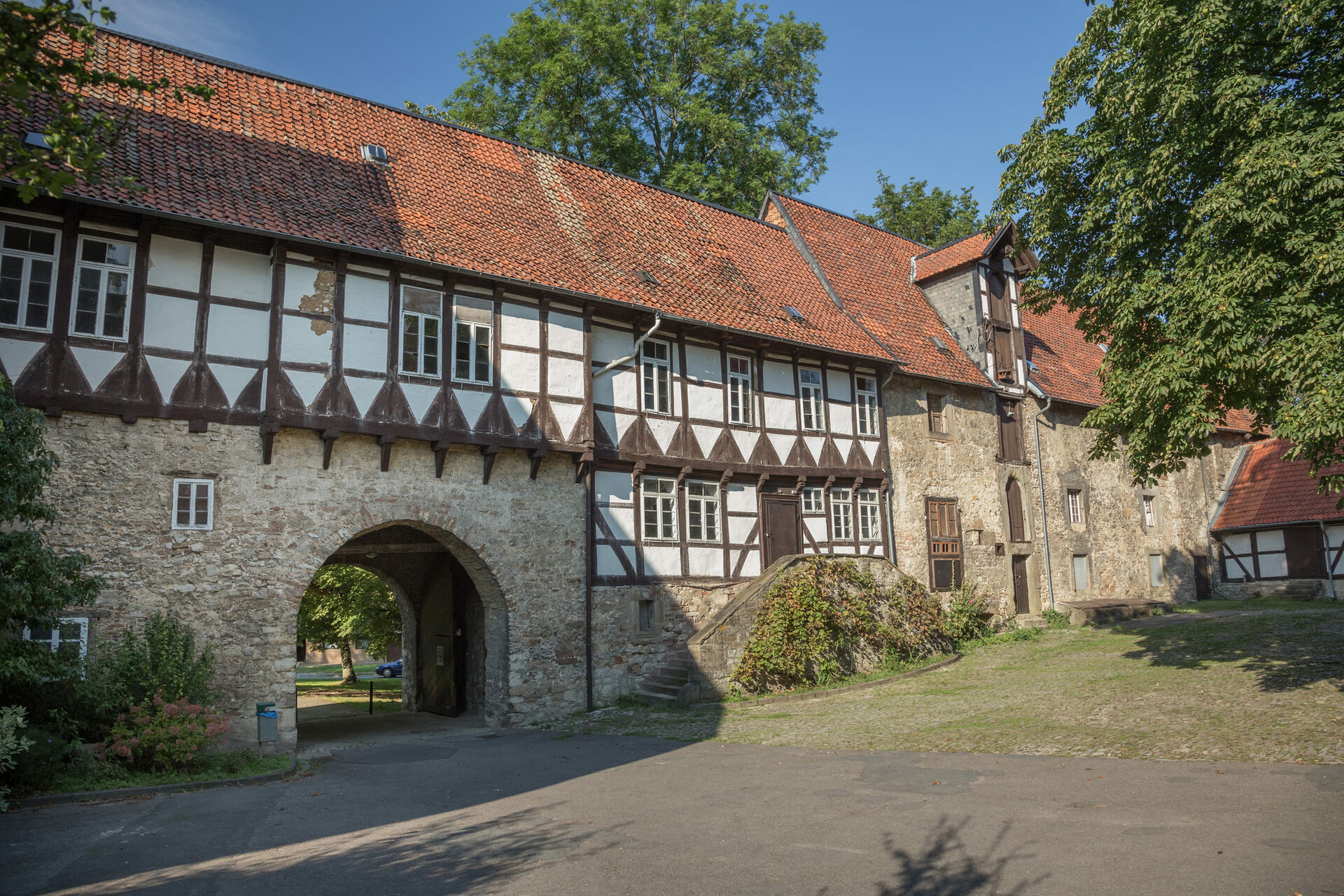
The noblemen of Hagen have been attested since 1129 and the castle is referred to as castro, quod appellatur Haghen (castle called Hagen) around 1186. Located on the important military and trade route between Minden and Halberstadt, the castle was the ancestral seat of the von Hagen family until around 1280, although little further information has survived.
The walls and moats of the castle were used to defend against enemy raids and sieges, which were quite common in this area at the time. The name of the castle goes back to Knight Gebhard von Borgfeld, who took over the castle from the Dukes of Wolfenbüttel in 1280.
At the time of the Lords of Bortfeld, the name Hagen was extended to include the first name Gebhard, which was common in their family. This was done to distinguish the Brunswick Hagen from the other Hagen also owned by the Lords of Bortfeld. The new name Gebhardshagen only referred to the castle until the 16th century.
At the beginning of the 15th century, the inhabitants of the vacant clearing settlements of Weddem and Kirchheerte moved into the protection of the castle. Their villages became deserted and their land was incorporated into the Hagen area. In 1406, the troops of the Bishop of Hildesheim destroyed most of the castle. The most important parts, especially the arsenal and the towers, were then rebuilt on behalf of the Dukes of Brunswick.
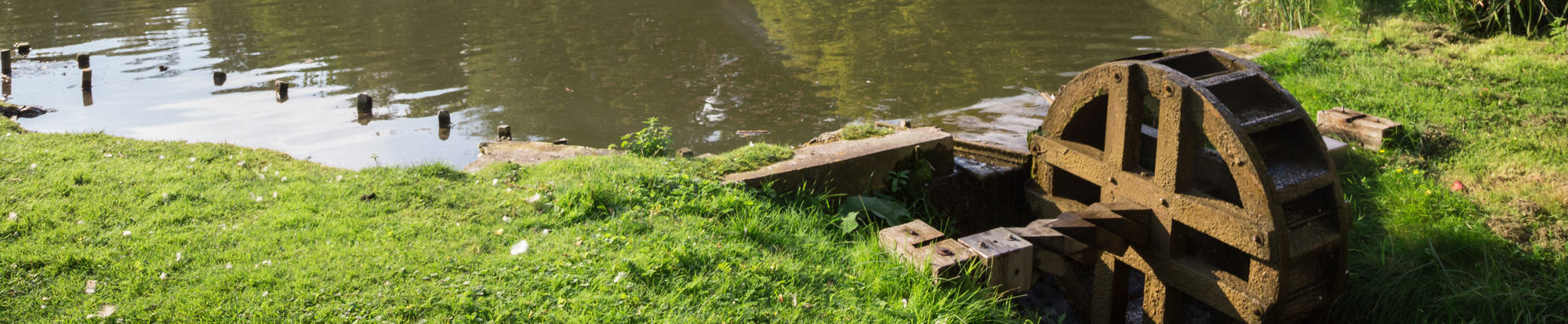
The population of the village consisted mainly of farmers, agricultural workers, craftsmen and tradesmen. Four water mills provided flour and grist. Cement mills and quarries were added later. Gebhardshagen was also known as a village of pannier makers and broom makers.
In the 16th century, Gebhardshagen Castle became the official seat. During the Thirty Years' War (1618-1648), Gebhardshagen Castle and village suffered damage, after which the castle was run more contemporarily as a domain. The barn area had already been almost doubled by a southern addition around 1560.
Duke Rudolf August (1666-1704) put the Gebhardshagen office and agricultural domain up for public lease for the first time. In 1671, the Privy Chamber Councillor and Chancellor Hermann Höpfner from Kronstedt was the first and highest bidder to be awarded the lease. The terms of the leases lasted three, six, nine or twelve years; they were adapted to the rhythm of three-field farming.
The development of the mines and smelting works in the 20th century made the village the home of many mining families. In 1982, the Haverlahwiese mine, the last of the 15 mines in Salzgitter and the Vorharz region, was closed down. Although it was the largest and most modern iron ore mine in Europe, ultimately producing 40 million tons of raw ore, it had to be closed for economic reasons. In 1983, an 18-ton tunnelling machine was erected on the corner of Weddemweg and Reichenberger Strasse as a memento, which had been used underground until shortly before the mine was closed.
Source: e.g. from the book "Salzgitter", by Jürgen Hodemacher, 1984
Information from the support association
The great importance of Gebhardshagen Castle.
On October 5, 1998, this time-honored historical ensemble in the heart of the city of Salzgitter challenged the citizens of Gebhardshagen to make a lasting commitment to its preservation and restoration.
The Förderverein Wasserburg Gebhardshagen e.V. and its members are endeavoring to maintain the historical monument with donations and to save the old castle from decay with various projects and structural measures. The rental of rooms and the annual events on the grounds provide additional support for the donations in order to continue to successfully implement the plans for the castle.
In the years of its existence, the association, which currently has around 120 members, has managed to create a gem and event venue for the whole of Salzgitter.