
Its natural resource, iron ore, was already known around the time of Christ's birth. Germanic tribes smelted it in "racing furnaces". As long as 50,000 years ago, an "early Lower Saxon", an Ice Age hunter, found his way to Salzgitter. His remains were discovered in 1952.
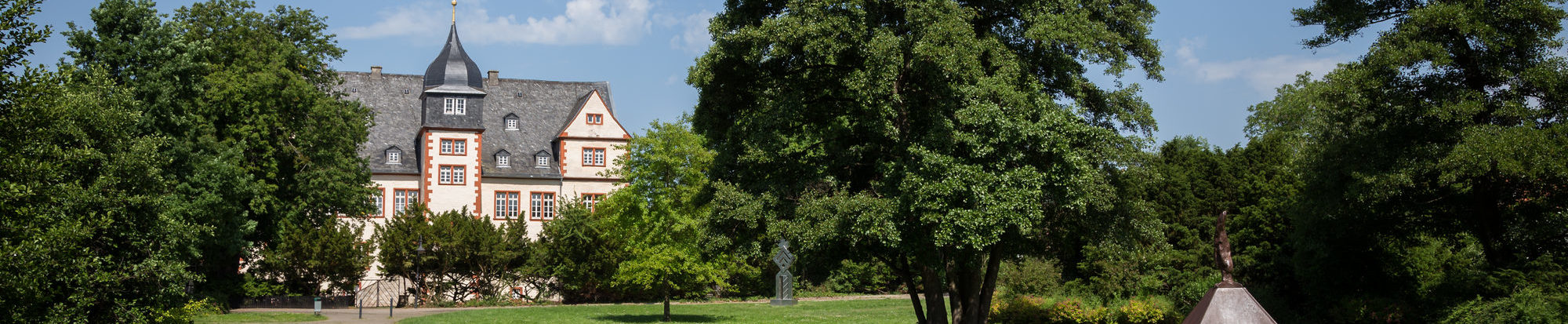
Other witnesses to a living history are Ringelheim Castle with a baroque church built in 1694 and a valuable organ, the almost 1000-year-old moated castle of Gebhardshagen, Engerode Chapel with valuable Gothic frescoes, one of the oldest pilgrimage churches in northern Germany, Flachstöckheim Manor with an English park, Steterburg Abbey - a ladies' convent founded in 1001 that replaced an early medieval castle complex - and the ruins of Lichtenberg Castle, once built by Henry the Lion.
Situated on a steep hilltop on the Lichtenberge, it served the great Brunswick Guelph Duke to secure his power against the episcopal city of Hildesheim and imperial Goslar. After the open dispute between Henry the Lion and Emperor Frederick Barbarossa in 1180, it was a preferred target for his troops. He conquered Lichtenberg Castle and only his successor Henry VI returned it to the Guelphs in 1194. It was destroyed much later, in 1552 at the end of the Schmalkaldic War.
From the keep, there is a magnificent view of northern Salzgitter as far as Braunschweig and the low mountain range landscape of northern Germany. The renovated walls also house a new permanent exhibition about the castle and its history. At the other end of the Lichtenberge, it is worth climbing the Bismarck Tower in Salzgitter-Bad. Visitors can hardly get any closer to the Brocken, the highest mountain in the Harz at 1142 meters.


 read out