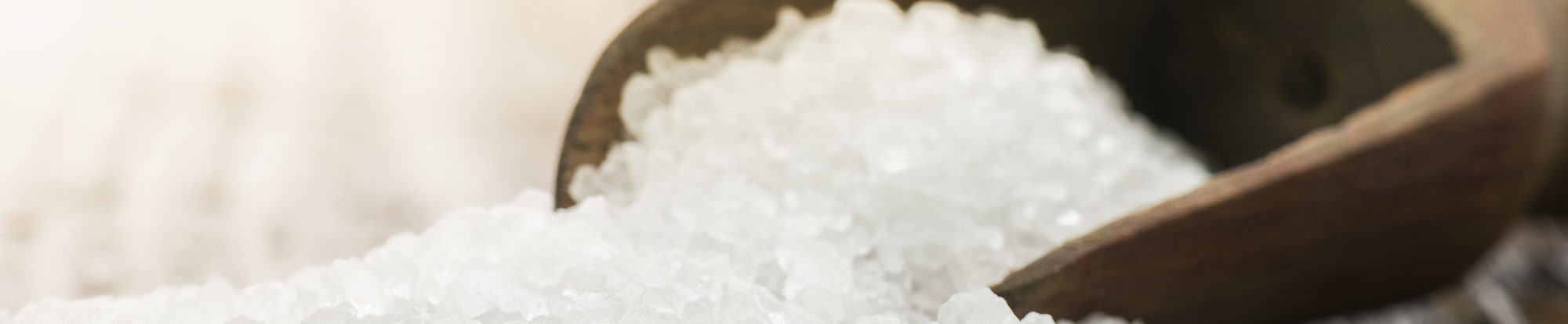
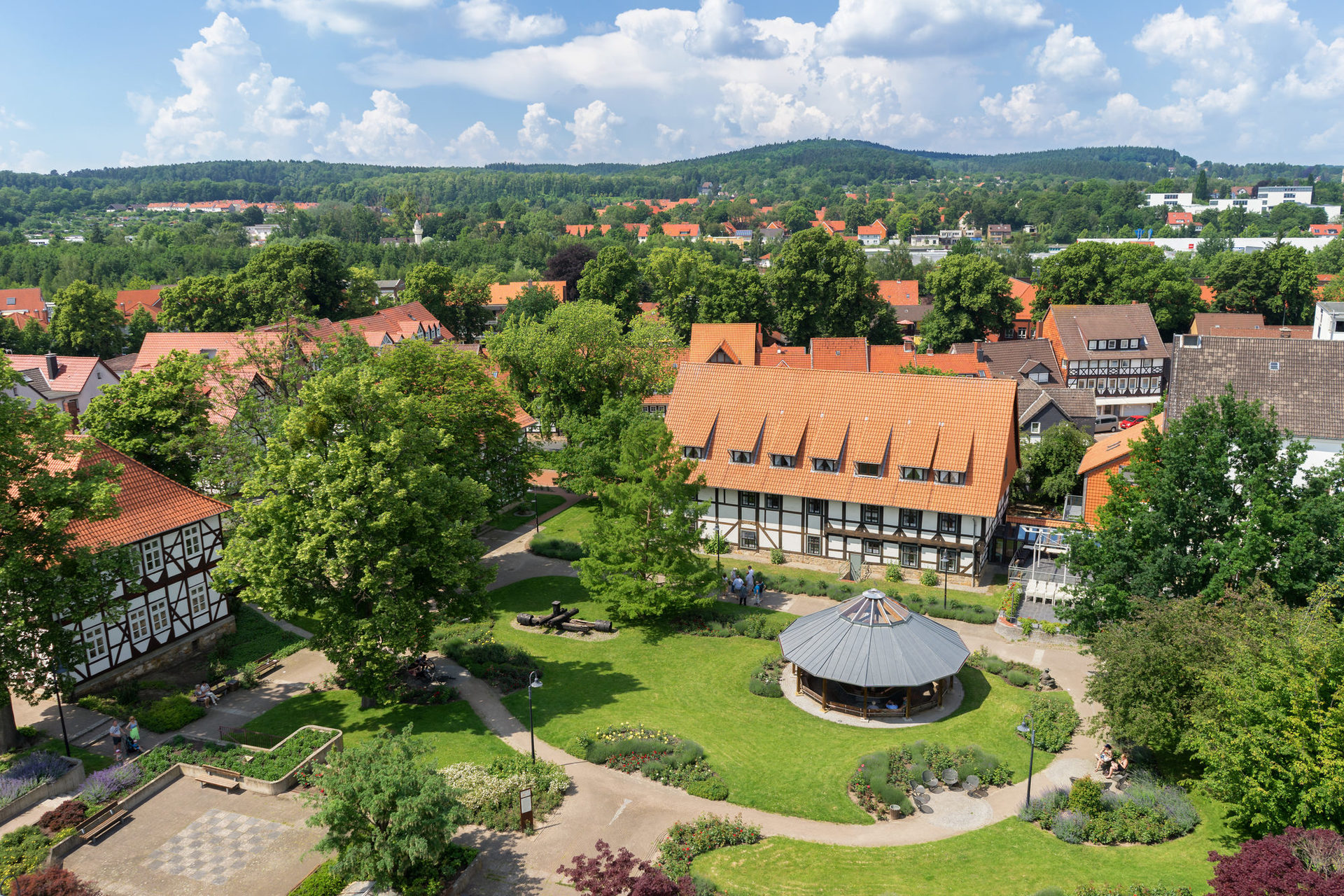
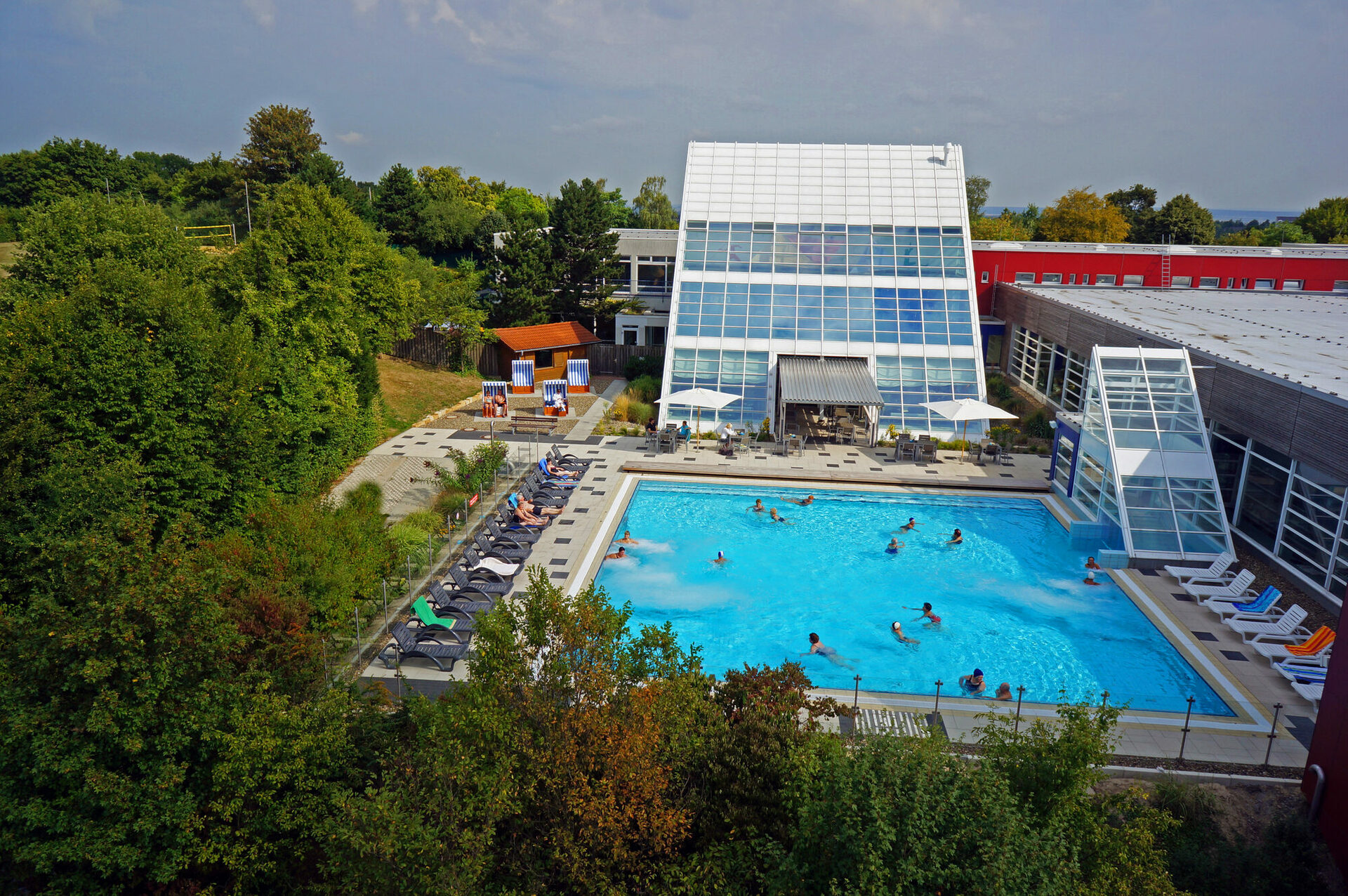
There are even two salt hooks in the town's coat of arms, which can be traced back to this origin. Today, the Thermalsolbad in Salzgitter-Bad and the graduation pavilion in the rose garden are signs of the rich brine.
Salzgitter was founded at the beginning of the 14th century around brine springs in the district of the later merged village of Verpstedt. The settlement took its name from the neighboring village and present-day district of Gitter (first mentioned in 1347 as "up dem solte to Gytere"). After 200 years of salt extraction in various salt works, the farmers in the area that is now Salzgitter were granted town rights around 1350, but the town lost these rights when it was transferred to the Duchy of Braunschweig at the beginning of the 16th century.
Salzgitter later belonged to the diocese of Hildesheim. When it was transferred to Prussia in 1803, the city rights were confirmed again, but were revoked in 1815 when Salzgitter was incorporated into the Kingdom of Hanover. In 1830, a brine bath was established in Salzgitter. With the transfer of the Kingdom of Hanover to Prussia (Province of Hanover) in 1866, Salzgitter became a Prussian municipality, which was again granted city rights in 1929. Vorsalz (1926) and Liebenhall (1928) had previously been incorporated. The town belonged to the district of Goslar and, in addition to the core town of Salzgitter, also included some small settlements that are no longer definable today, such as Gittertor. Kniestedt was incorporated in 1936.
Due to the extremely large iron ore deposits in Salzgitter, which were first mentioned as early as 1310, the National Socialists founded the Reichswerke-AG ("Hermann-Göring-Werke") for ore mining and ironworks in 1937. In 1938, the neighboring community of Gitter was incorporated. In order for the plant to develop well economically, a uniform administrative structure was required for the entire area. Therefore, in accordance with the 1941 ordinance on territorial adjustments in the area of the Hermann-Göring-Werke Salzgitter, a uniform urban district (independent town) was formed with effect from April 1, 1942.
For this purpose, the city of Salzgitter and the municipalities of Beinum, Flachstöckheim, Groß-Mahner, Hohenrode, Ohlendorf and Ringelheim (a total of 7 municipalities), which also belong to the district of Goslar, as well as the municipalities of Barum, Beddingen, Bleckenstedt, Calbecht, Drütte, Engelnstedt, Engerode, Gebhardshagen, Hallendorf, Heerte, Immendorf, Lebenstedt, Lesse, Lichtenberg, Lobmachtersen, Bruchmachtersen, Lesse, Lichtenberg, Lobmachtersen and Lichtenberg, which also belong to the district of Wolfenbüttel, Bruchmachtersen, Calbecht, Drütte, Engelnstedt, Engerode, Gebhardshagen, Hallendorf, Heerte, Immendorf, Lebenstedt, Lesse, Lichtenberg, Lobmachtersen, Osterlinde, Reppner, Salder, Thiede-Steterburg (today only Thiede) and Watenstedt (a total of 21 municipalities) were united to form the urban district of Watenstedt-Salzgitter. The new independent municipality was incorporated into the state of Braunschweig together with the rest of the district of Goslar. In return, the state of Braunschweig ceded the district of Holzminden to the Prussian province of Hanover.
With the village of Gitter, which had already been incorporated into Salzgitter in 1938, the young city initially had 29 districts from 1942. During the Second World War, Salzgitter was heavily destroyed by numerous American and British bombing raids. After the Second World War, the state of Braunschweig became part of the state of Lower Saxony and Watenstedt-Salzgitter thus became an urban district within what was now the "administrative district of Braunschweig" (later the administrative district of Braunschweig). In 1951, the town was renamed "Salzgitter", and the former district of Salzgitter was given the name Bad ("Salzgitter-Bad") because of the saltwater baths there. As part of the Lower Saxony territorial reform, the municipalities of Üfingen and Sauingen (Wolfenbüttel district) were incorporated on March 1, 1974. Since then, Salzgitter's urban area has consisted of 31 districts.