
The pigeons bred there were to provide the monastery with food for the table at certain times.
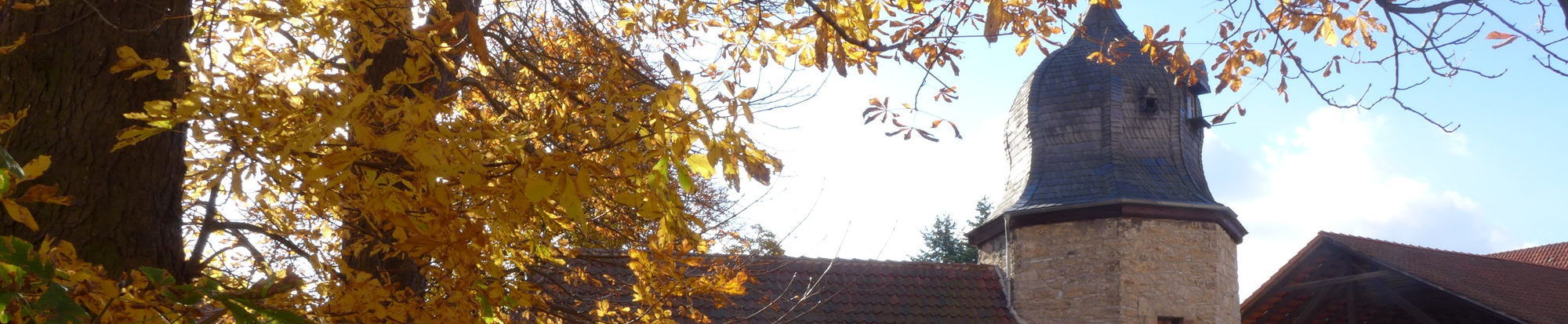
In keeping with the decorative requirements of the Baroque period, this tower was not kept simple, but was also provided with an octagonal Baroque dome in the style of the ridge turrets of the monastery church. Inside, it was fitted with nesting niches for pigeons along the entire height of the wall.
From 1713, the energetic Abbot Bernward Peumann, who was filled with Benedictine spirit, took over the further construction of the convent building.
After the introduction of compulsory education in Prussia, his successor Franziskus Freihoff added a small school building with two classes to the pigeon tower. The inscription above the door FF R FFA 1748 indicates the builder and year of construction.
A ceiling was later built into the tower and the resulting room served as a short-term prison for arrested lawbreakers until they were transferred to the Liebenburg office. During the Nazi era, the Hitler Youth met in the annex.
The tower was re-roofed by the estate inspector Stapel in 1952 and the extension was used as an engine house for water treatment during the time when the castle housed the lung sanatorium. After Karl Löwe bought the estate in 1968, the pigeon tower stood empty for a long time.
Since 1999, it has been restored by a group of friends, the "AG Taubenturm", in order to use the building as a whole. Since 2013, it has housed the wedding room of the registry office of the city of Salzgitter.
Text: Dirk Schaper, Ortsheimatpfleger