The topic of the future in Salzgitter: hydrogen
Hydrogen is considered a promising element of a climate-neutral future. For this reason, a cooperation agreement was signed in Salzgitter in September 2020 for the design of the innovative showcase project "Hydrogen Campus Salzgitter".
The contractual partners are the city of Salzgitter, the state of Lower Saxony represented by the Braunschweig Office for Regional Development, Allianz für die Region GmbH, the Fraunhofer Institute for Surface Engineering and Thin Films IST as a scientific partner and bridge to the Fraunhofer Hydrogen Network, and the Salzgitter-based companies Salzgitter AG, MAN Energy Solutions SE, Robert Bosch Elektronik GmbH, Alstom Transport Deutschland GmbH and WEVG Salzgitter GmbH & Co.
The campus also works with scientific partners in the region such as the TU Braunschweig and Leibniz Universität Hannover and thus the Energy Research Center of Lower Saxony (EFZN).
The campus is based at the Bosch Elektronik GmbH site in Salzgitter-Lebenstedt.
The aim is to develop a broad application of hydrogen and to interlink science, production and industry on the way to a climate-friendly age. Hydrogen technologies are to be realized from production to use, taking into account economic and ecological aspects. The campus is also establishing itself as a further education platform for specialists and managers in the region and beyond.
WEVG as a green energy service provider
WEVG Salzgitter GmbH & Co KG is the energy and water supplier for Salzgitter. The two shareholders of WEVG, Avacon AG and the City of Salzgitter, combine energy supply expertise with local regionalism.
As an energy service provider, WEVG has the key task of supporting the development of the necessary infrastructure as part of the "Hydrogen Campus". The electricity is to be transported to the electrolysis plants and the resulting green hydrogen to potential consumers so that the heat generated in the conversion process can be put to good use.
"Hydrogen Campus Salzgitter" project at Bosch
One example of the collaboration between the campus partners is the "Factory Transformation" project of the Fraunhofer Institute for Surface Engineering and Thin Films IST and Robert Bosch Elektronik GmbH. They are working on creating a real hydrogen infrastructure in the form of a pilot factory.
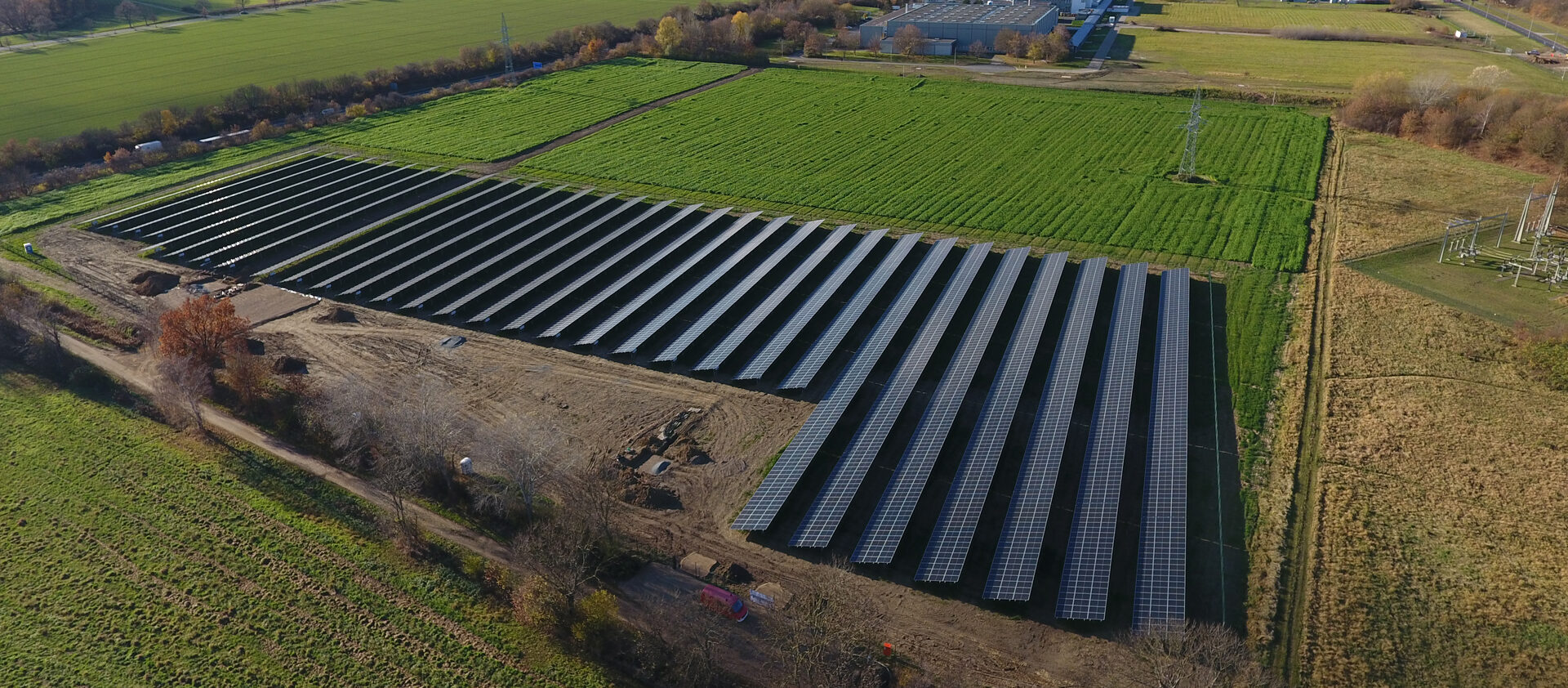
The Bosch plant has set itself the goal of reducing its CO2 emissions by 40 percent: by connecting to the district heating network and thus using the waste heat generated during Salzgitter AG's steel production; by building its own photovoltaic system on the plant premises and by using stationary fuel cells to generate electricity. The fuel cells are currently still operated with natural gas and hydrogen.
The fuel cells are developed and produced by Bosch itself. They are a project of the Hydrogen Campus. Series production is planned for 2024. The fuel cells will then be used in single-family homes, for example.
Study by MAN Energy Solutions and Fraunhofer IST
A study led by MAN Energy Solutions SE and the Fraunhofer IST was launched at the Salzgitter Hydrogen Campus at the beginning of May 2021.
The study compares local production, transportation from coastal regions and the import of hydrogen from a technical and economic perspective. It will also determine who could be a customer for the hydrogen, such as companies in the rail transport sector or in steel production.
The joint project aims to show under what economic conditions and in what time frame hydrogen could be available in the region.
Several work packages will determine which boundary conditions are necessary to enable a market for hydrogen and derived products in Germany.
However, the challenges of production in Germany will also be identified, suitable boundary conditions will be presented and recommendations for action to politicians will be developed.
The joint project is intended to establish the central data basis for the further activities of the Hydrogen Campus. To this end, an overview of technologies for the production, storage, transportation and use of hydrogen and derived products will be compiled.
A steel group becomes climate neutral
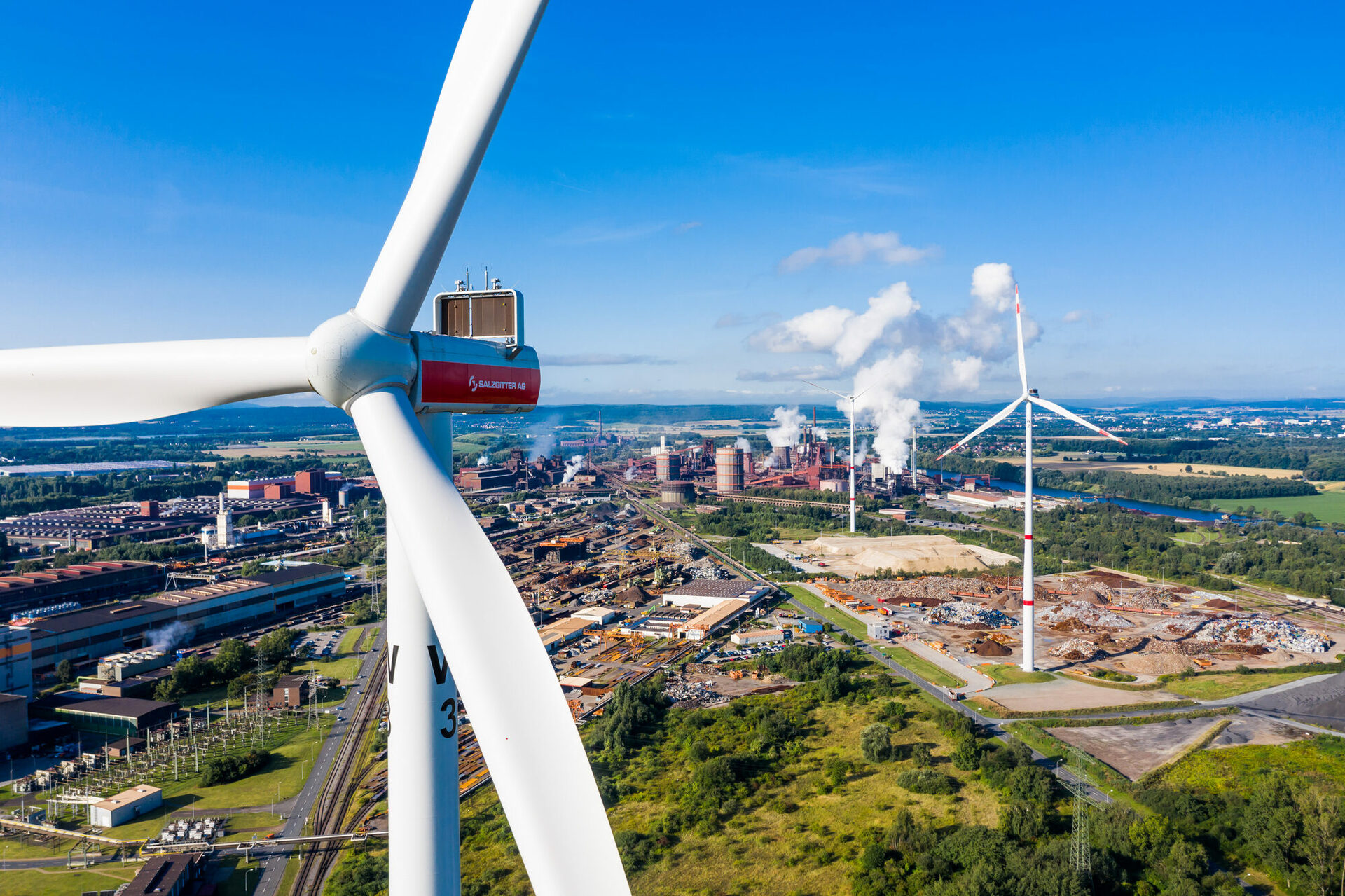
Salzgitter AG is currently making what is probably the most consistent development in terms of hydrogen. As part of its "SALCOS® - Salzgitter Low CO2 Steelmaking" program, it will gradually convert pig iron production using coking coal to hydrogen-based processes over the coming years. The production of pig iron in the blast furnace using coking coal generates process-related CO2, the emissions of which cannot be further reduced as part of this production process. The aim of the transformation to SALCOS® is to achieve virtually CO2-free production and a reduction in CO2 emissions by 2033.
From the end of 2025, blast furnaces and converters will be successively replaced by direct reduction systems and electric arc furnaces. According to the company, the plan is to produce more than one million tons of "green" steel in this way by 2026. As early as 2033, the steelworks will be completely converted to almost climate-neutral production and eight million tons of CO2 will be saved per year.
There is already growing demand for this "green" steel from the company's major customers in the automotive, energy, industrial and household applications and construction sectors. One customer is Volkswagen AG. It wants to produce its new electric model "Trinity" with the climate-neutral steel.
As a central element of its corporate strategy, Salzgitter AG has set itself the goal of becoming a leading company in the "circular economy".
The aim is to keep resources that have been extracted from nature in economic use for as long as possible. According to the company, steel is probably the best example of a circular economy because it is almost infinitely recyclable. The Group relies on cross-industry partnerships along the value chain. One example: Salzgitter AG supplies its customers with low-CO2 steel. In return, the steel company receives "steel scrap" for reuse.
*(SALCOS - Salzgitter Low CO2 Steelmaking)
Hydrogen-powered trains
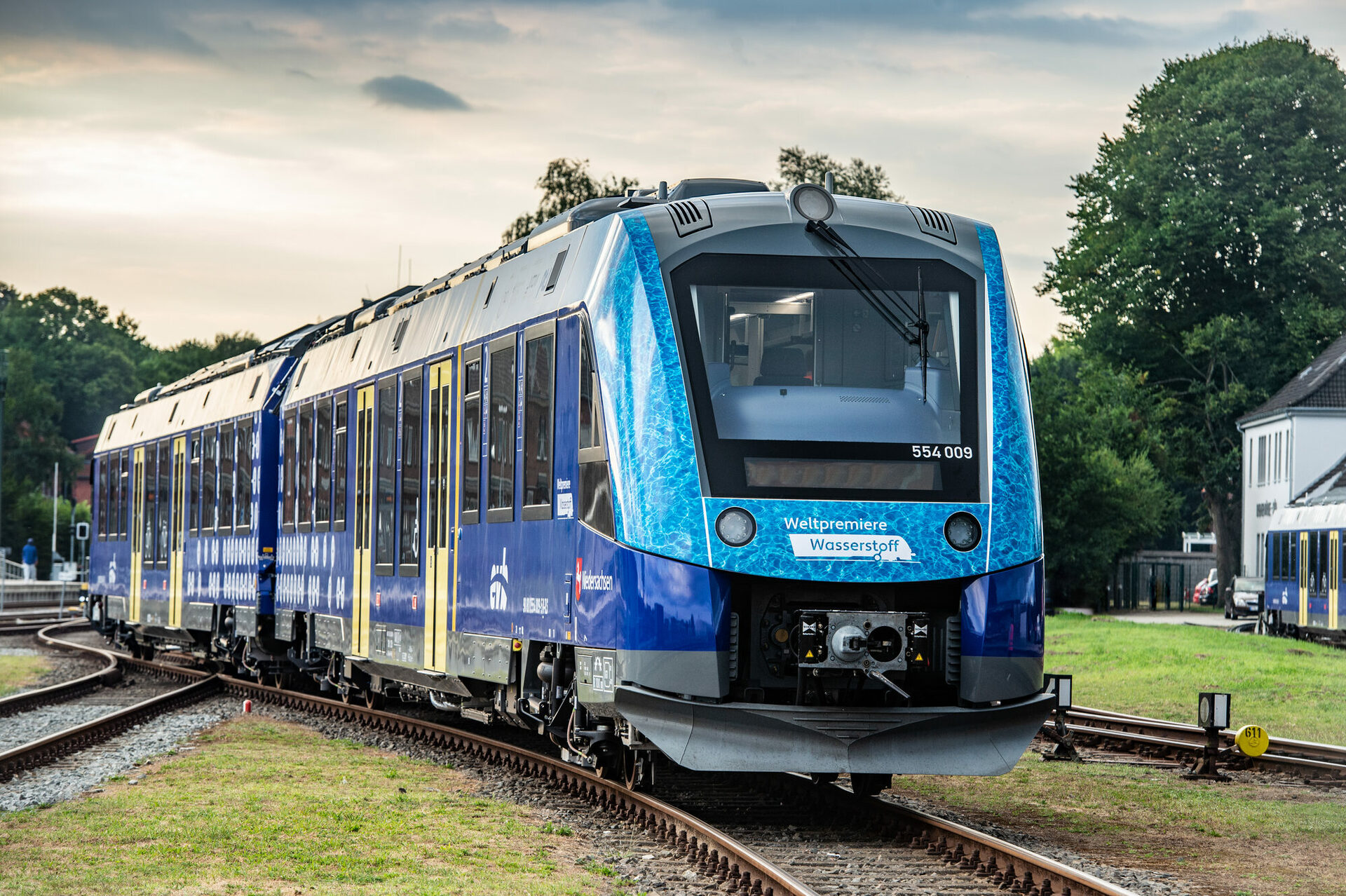
The train construction company Alstom is a pioneer when it comes to hydrogen as an energy source.
In 2016, Alstom presented the "Coradia iLint", a CO2-emission-free regional train for the first time, which represents a climate-friendly alternative to diesel trains. This made Alstom the first rail vehicle manufacturer in the world to develop a hydrogen-based passenger train. Initially in trial operation with passengers since 2018, it has been in the first regular passenger service worldwide between Buxtehude and Bremerhaven since August 2022. A fleet of 14 vehicles replaces the diesel trains previously operated here.
Since December 2022, the first "Coradia iLint" trains have been operating on the route between Frankfurt and Brandoberndorf in the Taunus region. The world's largest network of 27 hydrogen trains from Alstom is being built on four non-electrified branch lines in the Taunus.
There is now great demand for this train not only in Germany, but also from neighboring European countries and worldwide.
As part of a joint project, Alstom is also developing a solution for converting existing locomotives to hydrogen propulsion at its Salzgitter site. The company is implementing the project together with Verkehrsbetriebe Peine-Salzgitter (VPS), WTZ Roßlau gGmbH, TU Braunschweig and associated partners Fraunhofer IST and Robert Bosch Elektronik GmbH.
The project is supported by the city of Salzgitter with funding totaling around 1.5 million euros in structural aid from the state of Lower Saxony to the various partners. The aim is to enable emission-free shunting operations in rail freight transport in the future. The decarbonization of an existing locomotive is to be implemented for the first time on a VPS vehicle and tested on the railroad company's premises.
Future region South-East Lower Saxony
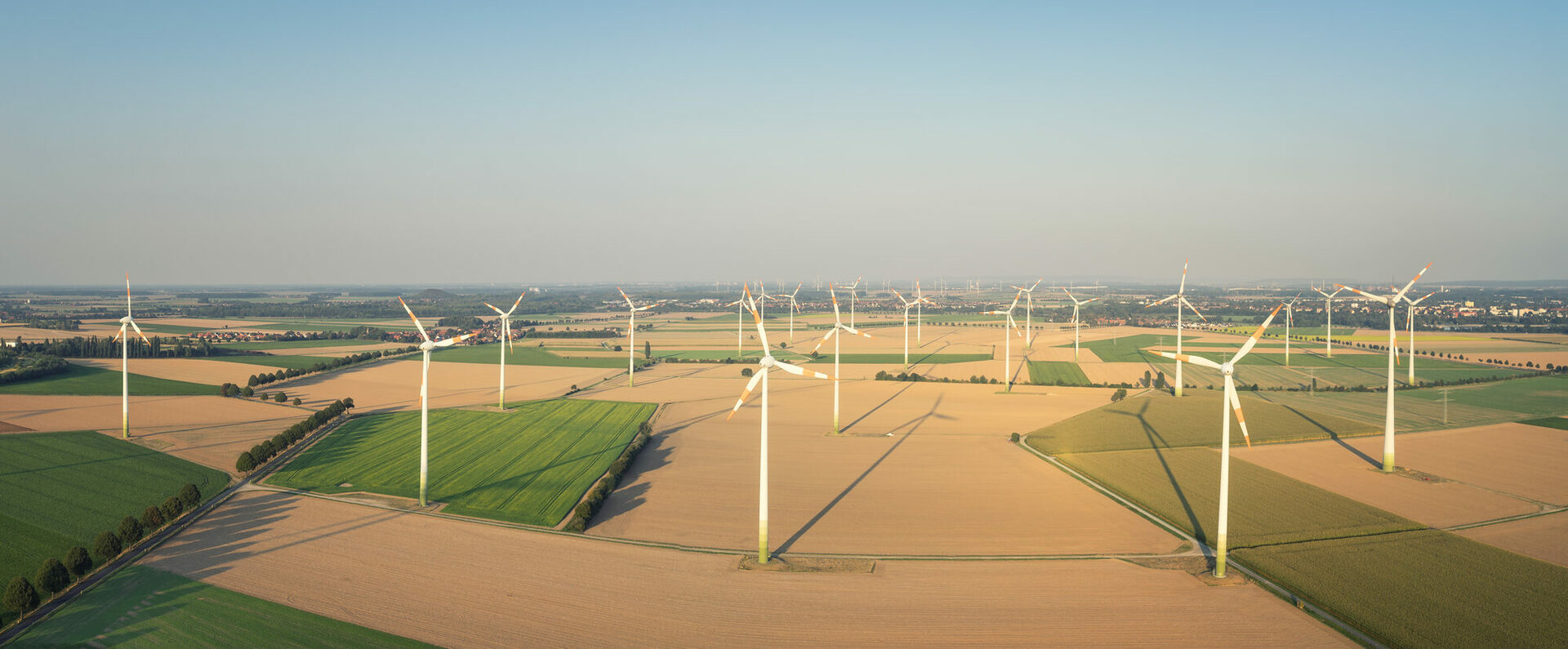
The city of Salzgitter will not be taking the path to a climate-neutral future alone. Together with the cities of Braunschweig and Wolfsburg and the districts of Gifhorn, Goslar, Helmstedt, Peine and Wolfenbüttel, it has concluded a cooperation agreement to develop a concept for the "Zukunftsregion SüdOstNiedersachsen".
The project municipalities from the region have agreed on two fields of action from the funding project program of the Lower Saxony Ministry for Federal and European Affairs and Regional Development (MB): "Regional Innovation Capability" and "Low CO2 Society and Circular Economy". They build on the Hydrogen Campus in Salzgitter and complement topics currently being worked on there such as CO2 minimization and hydrogen transformation.
The partner municipalities are receiving financial support from the Lower Saxony Ministry for Federal and European Affairs and Regional Development (MB), which has launched a new funding program. It aims to ensure attractive living conditions in all parts of Lower Saxony in the long term. By promoting joint projects and the formation of a Zukunftsregion, cooperation between neighboring districts and independent cities is to be supported for an initial period of six years.