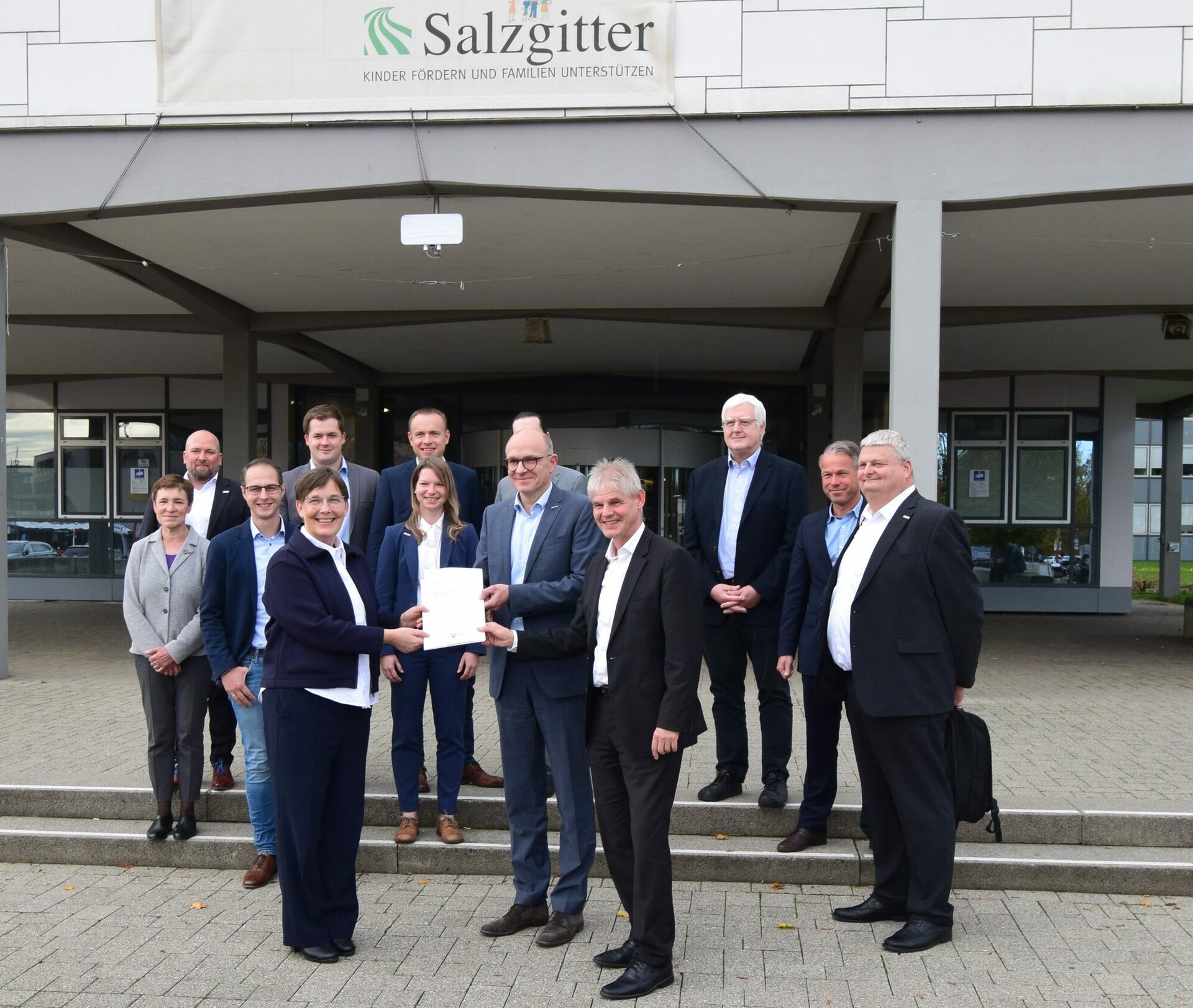
This is being done together with the Peine-Salzgitter public transport company (VPS), the WTZ Roßlau gGmbH, the TU Braunschweig and the associated partners Fraunhofer IST and Robert Bosch Elektronik GmbH.
The project is supported by the city of Salzgitter with funding totaling around 1.5 million euros from the structural aid provided by the state of Lower Saxony to the various partners. The aim is to enable emission-free shunting operations in rail freight transport in the future. The decarbonization of an existing locomotive is to be implemented for the first time on a VPS vehicle and tested on the railroad company's premises.
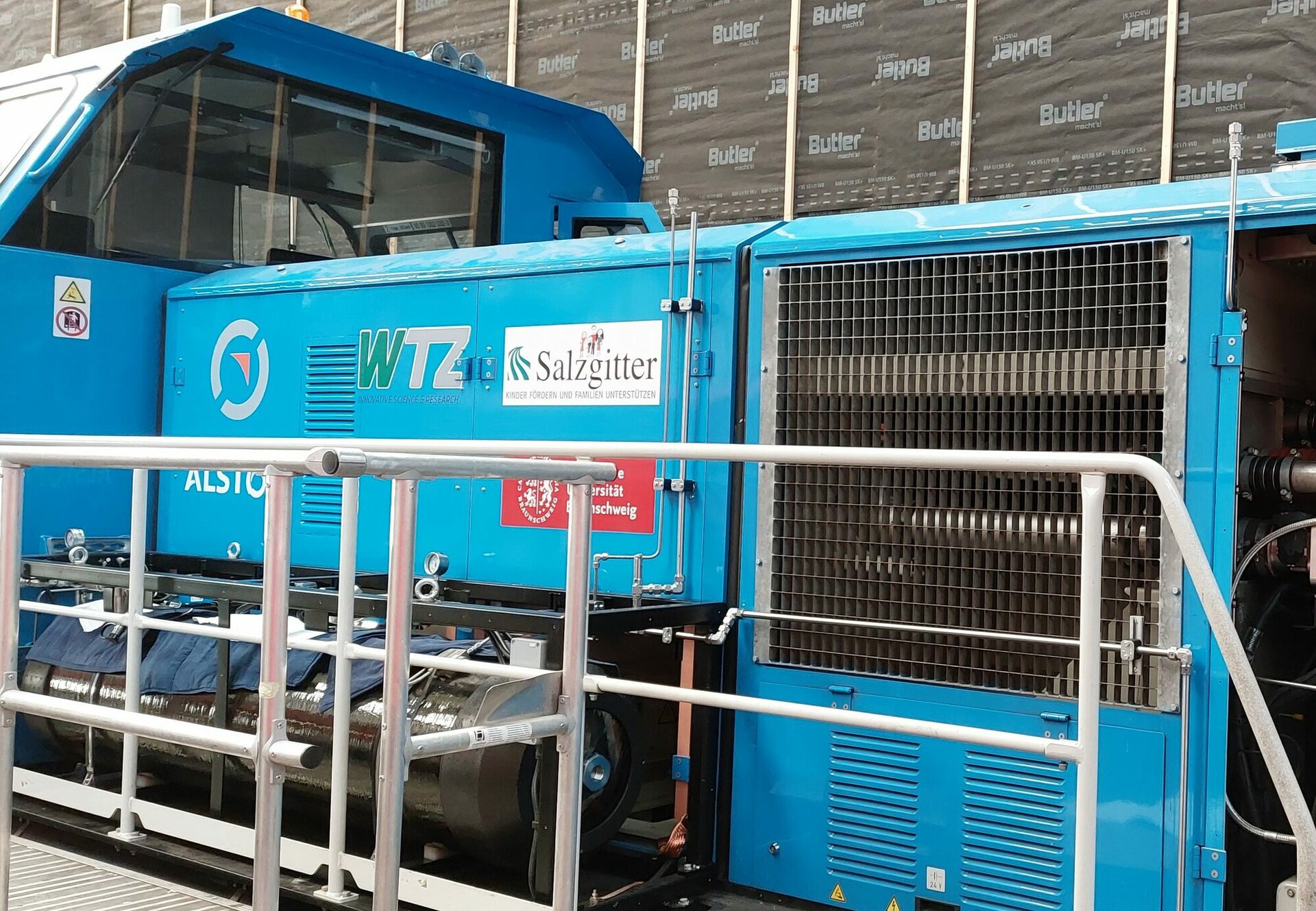
A diesel shunting locomotive has an average life expectancy of 50 to 70 years and emits around 151 tons of CO2 and 4.26 tons of nitrogen oxides per year. If existing locomotives can be converted from diesel to hydrogen, this will allow a remarkable reduction in CO2
emissions, reduces the costs per operating hour and extends the service life of existing rail vehicles. Compared to an early generation change, the decarbonization of existing vehicles would also be significantly cheaper for operators than the procurement of new vehicles.
vehicles. It can also be assumed that the German government's climate targets could be achieved more quickly with a retrofit solution than by bringing forward a generation change.
State Commissioner Dr. Ulrike Witt also emphasizes the central role of hydrogen in achieving the climate targets. "Alstom has positioned itself very successfully for rail transport with the Coradia iLint, the first hydrogen train for regional transport. The success story of the Salzgitter Hydrogen Campus will continue with the new project to convert shunting locomotives to hydrogen propulsion. I am very pleased that this can be supported and realized with funding from the state. The cooperation between the state, the city of Salzgitter, industry and research
research also shows in this project how innovations can be launched. Our region is setting an exclamation mark here!"
Frank Klingebiel, Mayor of the city of Salzgitter, explains: "By converting existing locomotives to hydrogen, our city is raising its profile as Lower Saxony's third-largest innovative industrial location. I would like to thank everyone involved and I am sure that this project will be a complete success. We are making an important contribution to climate protection. The idea of the Wasserstoffcampus will become more visible with this fifth funding project, which aims to convert existing locomotives from diesel to hydrogen. For me, this was a convincing reason to propose to the city council that funds from the third pillar of the structural aid program in the amount of 1.5 million euros be made available to the partners in order to drive this development forward."
"We are very much looking forward to being able to offer our customers a way to sustainably modernize their existing fleets with this project. Our focus at Alstom is on future-oriented, clean mobility solutions, and with this retrofit solution we will make an important contribution to the decarbonization of shunting traffic," says Dr. Christian Bieniek, Site Managing Director Salzgitter at Alstom. "Our site in Salzgitter is the birthplace of the world's first fuel cell train approved for passenger transportation. It is only logical that we are opening the next chapter in the use of hydrogen as an energy source in rail transport with this project."
Prof. Dr. Peter Eilts, Head of the Institute of Internal Combustion Engines at the Technical University of Braunschweig, says: "We are delighted to be involved in this highly interesting project. It fits in very well with our other activities in the field of hydrogen engines." "For us, the research project to develop a solution for converting existing diesel locomotives to hydrogen propulsion is highly topical," explains Brecht Günther, Head of Maintenance at Verkehrsbetriebe Peine-Salzgitter GmbH. "With the SALCOS® - Salzgitter Low CO2 Steelmaking program, the Salzgitter Group will be converting its entire pig iron production from the blast furnace route to direct reduction, initially using natural gas and later hydrogen, over the next ten years or so. As a railroad in the Group, we are required to find low-CO2 drives for our shunting locomotives and have found an alternative for converting our locomotive fleet with the concept developed in the research project."
"A central task of our research facility is the transfer of knowledge and technology to industry," says Enrico Rothe, Head of Department at WTZ Roßlau gGmbH. "Thanks to the intensive preliminary development work in the field of hydrogen engine technology in recent years, the WTZ Roßlau is contributing its expertise, especially in the field of combustion process development and system application, to the research project in order to successfully transfer the future-proof hydrogen engine technology from the idealized test bench to the real track. We are very much looking forward to the joint development work in this pioneering hydrogen project. Because a green future is what drives us!"
"Together with numerous supporters of the Hydrogen Campus Salzgitter, we are advancing an important project and thus strengthening our hydrogen region. In addition, Bosch is developing various drive technologies on an equal footing, as it is clear to us that many paths contribute to climate neutrality," emphasizes Michael Gensicke, Member of the Board of Management of Robert Bosch Elektronik GmbH.
Alstom plans to offer a generic conversion kit for existing diesel locomotives once the research project has been completed. The associated development work and the conversion and approval of the vehicles in question would help to secure existing jobs at the Alstom site in Salzgitter and would probably also necessitate the creation of new jobs.